-
Exploring the Potential of Soy-Based Materials: Sustainable Textile Design and Apparel Production
Kasandra Wright
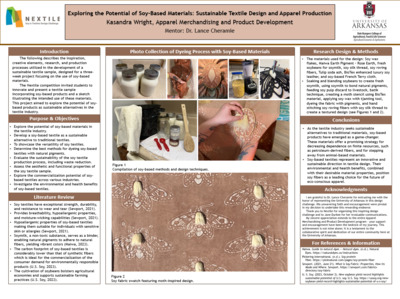
The textile industry is a significant contributor to environmental degradation, particularly through water, energy, and chemical pollution. Soy-based materials offer a sustainable alternative due to their biodegradability, renewability, and reduced water and chemical usage compared to traditional textiles. However, the potential of soy materials in fashion design remains largely unexplored. This project aimed to investigate the feasibility and aesthetic potential of soy-based materials in fashion design, with a focus on creating sustainable soy textiles using batik techniques.
The completed soy textile design showcased a moth motif crafted through batik techniques. Vibrant colors and a distinctive texture were achieved through wax application and pigment adherence. This design process underscored the capacity of soy-based materials to produce visually captivating and sustainable textiles.
The methods encompassed soaking and blending soybeans to produce soymilk, bonding natural pigments with soymilk, repurposing soy pulp as livestock feed, employing the batik technique, crafting a moth stencil using BioTex soy-based faux leather material, applying soy wax with a tjanting tool, dyeing fabric with pigments, and hand-stitching soy roving fibers with soy silk thread to enhance texture.
This project affirms the viability of integrating soy-based materials into fashion design. Findings indicate that soy textiles present a sustainable alternative with distinctive aesthetic potential. Future investigations could delve into further design applications and assess the commercial feasibility of soy-based textiles. Ultimately, this project adds to the expanding body of knowledge concerning sustainable fashion practices and materials.
Printing is not supported at the primary Gallery Thumbnail page. Please first navigate to a specific Image before printing.