


Files
Download Full Text (525 KB)
Date of Graduation
5-2026
Description
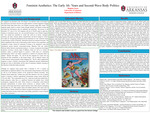
Despite its tremendous impact on both second-wave feminist organizing and women's political consciousness, Ms. magazine remains understudied by scholars interested in emergent feminist consumers and emergent feminist citizens. This study aims to fill the gap in scholarship around late 20th century periodical studies by offering content analysis of the first two years of Ms., July 1972 to June 1974 to offer a content analysis of second-wave feminism's foray into magazine culture and understand how Ms. articulated feminist politics, feminist writing, and women's consumer power to raise women’s consciousness. My research was focused on the archival issues from July 1972 to June 1974 of Ms. acquired from the University of Arkansas Libraries, as well as the supplemental publications of the magazine. I took a similar approach to Katherine Sender’s methodology in her work on the Advocate, and performed a content analysis to identify, quantify, and discuss the topoi of feminist consciousness-raising as the magazine began. Centering this historical media studies project within the rhetorical tradition focuses attention on the magazine's writing genres including: the cover page, the table of contents, features, editorial statements, advertisements, poetry and fiction, services, and departments. These genres offer multiple avenues for feminist consciousness-raising which helped underscore the kinds of rhetorical work Ms. was doing to create and sustain feminist politics. In engaging with Ms. magazine through a critical cultural lens, and building upon the work of Amy Erdman Farrell, and Katherine Sender, this project asks: How did Ms. raise women’s consciousness about political issues raised by feminist organizing? How did consciousness-raising in the magazine employ individualism and community-building to influence the behavior of female readers? How did Gloria Steinem use her voice as editor to build a forum for women’s consciousness and did it differ from the editorial function that Jordan Carroll defines for male contemporaries? What contributions did Ms. offer women beyond consciousness-raising? I argue that Ms. incorporated the politics of feminism into mass media to raise consciousness through: exposing the cultural space of the home to promote individualism, dispelling myths of the “feminized” body, and emphasizing community solidarity to raise women's consciousness through both documenting and producing feminist history. Together, these three facets of Ms. created an archive of feminist consciousness that occupied a singular space in late-twentieth-century magazine culture by virtue of its deep reading of feminist politics. In answering my research questions, this project found that Ms. was a revolutionary force that changed the tried-and-true rule of women’s magazines by creating an aesthetic of the feminist in their magazine. The magazine’s aesthetic practice of intentionality through consciousness raising led women to become more political in their lives. Through this, Ms.’s main impact was through formulating an aesthetic of liberal feminist ideals and disseminating it into the woman’s home. This research contributes to showing how media adds to the cultural canon and creates lasting effects in all aspects of social life. Ms. magazine’s iconic messages in the 1970s still mirror conversations had today. This project shows how influential representational media can be.
Publication Date
2026
Document Type
Poster
Degree Name
Bachelor of Arts in History
Degree Level
Undergraduate
Department
History
Advisor/Mentor
Corrigan, Lisa
Disciplines
Arts and Humanities
Keywords
Humanities
Citation
Lucas, M. (2026). Feminist Aesthetics: The Early Ms. Years and Second-Wave Body Politics. 2026 Research Poster Competition. Retrieved from https://scholarworks.uark.edu/hnrcsturpc26/17

