


Files
Download Full Text (933 KB)
Date of Graduation
5-2026
Description
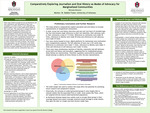
Journalism is used to inform people, to serve as the watchdog of the government, and to tell intriguing, timely stories that would remain uncovered otherwise. However, misrepresentation of marginalized communities in the stories journalists tell can undermine the public’s trust in news media. In a study conducted at Oxford University, researchers determined that members of communities that are historically marginalized due to factors such as race, gender and class were more likely to see mainstream news media as “biased, sensationalistic, and depressing” and the journalists that write them as “out of touch, lacking the lived experience or knowledge to understand their realities, or even prejudiced.” However, many people within these focus groups also said that they had positive experiences with individual journalists and blamed the many shortcomings of commercial news media as a whole. (Arguedas, 2023) To determine how oral history research techniques used by researchers at the Pryor Center for Arkansas Oral and Visual History could be used to increase journalistic integrity, four interviews conducted by a student research team at the Pryor Center were coded and analyzed using qualitative data analysis software. Each person who was interviewed identified both as an Arkansan and as a member of a historically marginalized community. Each person’s responses were sorted based on expressions of personal advocacy, identity and community using MAXQDA, a qualitative data software program. Preliminary results indicate that discussions of advocacy, identity and community often overlapped, and people felt more comfortable telling personal stories and identifying as a proud member of a marginalized community when they were given more time to reflect on an open-ended question before speaking. Oral history techniques such as this empower an interviewee to control their own narrative, rather than allowing the interviewer to impose preconceived stereotypes or biases about a person or marginalized group during an interview. Further research is now needed to determine how to train journalists to ask better questions and hold more authentic conversations to increase public trust in news media.
Publication Date
2026
Document Type
Poster
Degree Name
Bachelor of Arts in Journalism
Degree Level
Undergraduate
Department
Journalism
Advisor/Mentor
Foster, Bobbie
Disciplines
Arts and Humanities
Keywords
Humanities
Citation
Morano, M. (2026). Comparatively Exploring Journalism and Oral Histories as Modes of Advocacy for Marginalized Communities. 2026 Research Poster Competition. Retrieved from https://scholarworks.uark.edu/hnrcsturpc26/33

