


Files
Download Full Text (791 KB)
Date of Graduation
5-2026
Description
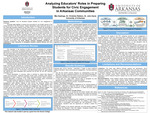
Individuals aged eighteen to twenty-nine accounted for only thirteen percent of the voting electorate in the 2018 election, despite representing nearly twenty-two percent of the voting age population (Making Young Voters, 2020, p. 3). Although the percentage of students enrolled in at least one high school government course has remained relatively constant since the late 1920s, most state standards, including those in Arkansas, require only a single civics course to graduate (Branson, 2003, p. 3). As a preservice teacher, I am struck by how civic education often focuses on reciting facts about government and political institutions rather than equipping students with the skills to take civic action beyond voting. Schools reach nearly every young person in the country, giving educators a powerful opportunity and responsibility to cultivate engaged citizenship. In Arkansas, the Department of Education’s Social Studies Standards emphasize civic virtues in society. Yet, a gap remains in how civic knowledge and participation is translated within classrooms.With my research I seek to answer the question: “How do educators prepare students for civic engagement in Arkansas?” Through this study, I intend to identify practical strategies educators can implement to strengthen students’ political efficacy and civic participation. To address the research question, I will participate in a practice-based experience with the Arkansas Collegiate Civic Leadership Academy, a seven-month program hosted by the Winthrop Rockefeller Institute. Through five seminars on topics such as public service, journalism, and local government, I will analyze how these experiences inform educators’ roles in promoting civic engagement. After each seminar, I will respond to three reflection questions designed to assess the connection between civic learning, classroom application, and personal development as a future educator. The reflections will be analyzed using a reflexive thematic analysis to identify recurring themes and practical strategies for classroom implementation. The findings will be compared to Arkansas’s current Civic standards to assess how educators can better foster a generation of informed, active citizens in a democratic society. Additionally, the results will provide teachers, administrators, and curriculum develops with intentional strategies to promote civic participation and strengthen democratic engagement among students in Arkansas and beyond.
Publication Date
2026
Document Type
Poster
Degree Name
Bachelor of Arts in Teaching
Degree Level
Undergraduate
Department
Curriculum and Instruction
Advisor/Mentor
Ralston, Christine
Disciplines
Curriculum and Instruction
Keywords
Social Science
Citation
Hastings, M. (2026). Analyzing Educators’ Roles in Preparing Students for Civic Engagement in Arkansas Communities. 2026 Research Poster Competition. Retrieved from https://scholarworks.uark.edu/hnrcsturpc26/36

