


Files
Download Full Text (760 KB)
Date of Graduation
5-2026
Description
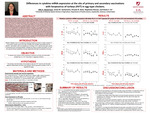
Marek’s disease, a lymphoma causing virus, remains a major concern in poultry production systems. Although vaccination with live herpesvirus of turkeys (HVT) is crucial for controlling this disease, information on how the vaccine drives local/tissue immune responses that lead to protective immunity is limited. Using the growing feather (GF) in vivo bioassay, we assessed local cytokine mRNA expression following primary and booster intradermal (i.d.) HVT vaccinations in egg-type chickens. For this, six 9-week-old and six 19-week-old Light-brown Leghorn (LBL) pullets were i.d. injected into the pulp of growing feathers (GF; 10 µL/GF; 16 GFs/bird) with a primary (V1) or secondary (V2) live HVT vaccine, respectively. GFs were collected before (0 d), 0.25, 1, 2, 3, 5, 7, and 10 d post GF-pulp injection (p.i.) for gene expression analysis by qRT-PCR. Data were subjected to 2-way ANOVA to evaluate the effects of vaccine, time, and their interactions, and followed by Bonferroni multiple means comparison as appropriate. Significance was set at P0.05. A marginal interaction (P = 0.052) of vaccine by time was observed for IL-1β mRNA levels. Following V1 vaccination, IL-1β remained near pre-injection levels (0 d) up to 3 d p.i., declined at 5 d, and returned to 0 d levels at 7 d, before decreasing again on 10 d p.i. In contrast, V2 vaccination increased IL-1β expression from 0 d to the highest levels at 0.25 d and 1 d p.i., after which IL-1β returned to baseline levels. IL-1β expression was higher at 0 d, 3 d, and 7 d p.i. with V1 than V2. There was a main effect of time for the expression of iNOS (P = 0.033), IFN-α (P = 0.016), and IFN-β (P = 0.002), whereby levels declined post-vaccination, increased to near baseline levels on 7 d, and then dropped again below baseline levels at 10 d p.i. The cyclical drops in iNOS and type I interferons in both vaccination groups, and in IL-1β in V1 pullets, likely reflect the HVT infection-mediated suppression of inflammatory and antiviral pathways. The positive IL-1β response profile following the secondary vaccination of live HVT-vaccine suggests a protective effect by the first HVT vaccination in preventing suppression of this inflammatory pathway, which plays an important role in signaling tissue infection and/or injury.
Publication Date
2026
Document Type
Poster
Degree Name
Bachelor of Science in Poultry Science
Degree Level
Undergraduate
Department
Poultry Science
Advisor/Mentor
Erf, Gisela
Disciplines
Poultry or Avian Science
Keywords
Natural Science
Citation
Bowerman, A. (2026). Differences in cytokine mRNA expression at the site of primary and secondary vaccinations with herpesvirus of turkeys (HVT) in egg-type chickens.. 2026 Research Poster Competition. Retrieved from https://scholarworks.uark.edu/hnrcsturpc26/45

