


Files
Download Full Text (1.4 MB)
Date of Graduation
5-2026
Description
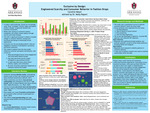
The drop business model centers on releasing small batches of products, often without much notice, on a recurring or semi-regular schedule. These limited releases, or "drops," sell out quickly and rarely restock, creating urgency and making each product feel exclusive. Consumers are trained to anticipate launches, check for updates, and act fast within minutes to secure items before they’re gone. By tapping into psychological drivers such as scarcity, fear of missing out (FOMO), and the desire for social belonging, the drop model flips traditional retail logic. Instead of keeping shelves full, it withholds. Instead of lowering prices to drive sales, it often prices everyday items, such as hoodies, at a premium, justifying this through status, storytelling, and community.To understand how consumers navigate this environment, I designed a survey based on prior consumer behavior research, conversations with participants both inside and outside drop culture, and my own experience with these releases. The survey explored four key areas: participation and purchase behavior, word-of-mouth and online commentary, pricing perceptions, and post-purchase reflections.To collect responses, I developed a three-part distribution strategy. First, I shared platform-specific content on TikTok, Instagram, and LinkedIn, tailoring messaging to each audience. Second, I encouraged participants to forward the survey to their friends, thereby expanding its reach through personal networks. Third, I contacted professional and academic advisors to access additional perspectives. The intentionality behind these steps helped ensure the survey reached both regular drop followers and more casual participants. The diversity of responses provided a well-rounded view of product drop experiences.Preliminary results suggest that fashion product drops are emotionally charged and socially complex experiences. The data shows consumers reporting excitement, urgency, anxiety, and occasional regret, often occurring simultaneously. Many respondents indicated identity signaling and a desire to belong within brand communities as purchasing motivations. Furthermore, social influence and word-of-mouth also played a role in shaping drop participation and satisfaction. Findings reveal that participants frequently reassessed value after the fact, balancing their emotional impulses against practical considerations. The findings, among others, provide brands with insight into what drives people to act within minutes, how scarcity and pricing influence emotional engagement, and how social networks and community norms shape both decisions and satisfaction. For consumers, it illuminates why they feel excitement and regret at the same time, showing how identity, belonging, and FOMO interact in fast-moving markets. Academically, the study provides one of the first datasets on this emerging phenomenon and offers a foundation for understanding product drops and other high-pressure, exclusive retail environments. With this data, we can better understand how modern retail culture shapes decision-making, social signaling, and emotional experience.
Publication Date
2026
Document Type
Poster
Degree Name
Bachelor of Science in Business Administration
Degree Level
Undergraduate
Department
Marketing
Advisor/Mentor
Rapert, Molly
Disciplines
Business
Keywords
Business
Citation
Meyer, C. (2026). Exclusive by Design: Engineered Scarcity and Consumer Behavior in Fashion Drops. 2026 Research Poster Competition. Retrieved from https://scholarworks.uark.edu/hnrcsturpc26/5

