


Files
Download Full Text (727 KB)
Date of Graduation
5-2026
Description
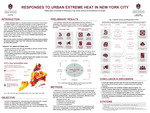
Climate change is wicked. The term itself lacks a single definition and individuals vary in understanding of its causes and effects. Often, it is considered through the lens of global phenomena: deterioration of the ozone layer, destabilization of the arctic circle, or other abstract impacts that are often difficult to fully comprehend. Harder to trace is the impact on a local scale: access to food and water, increase in natural disasters and displacement. The impacts threaten to deepen already wide inequalities. Design theorists Horst Rittel and Melvin Webber characterized such challenges as “wicked problems,” a concept that aptly describes climate change. Wicked problems are defined by their complexity, evolving conditions, and lack of definitive solutions; responses are neither right nor wrong, but rather better or worse. Despite the impossibility of a final or singular solution, engaging with wicked problems remains essential, as incremental and context-specific interventions can produce meaningful impacts. This urgency is especially pronounced in low-income communities, where limited access to financial resources, infrastructure investment, and political capital significantly reduce climate resilience. In the face of extreme heat and other climate-related stressors, recovery times in these communities are often substantially longer than those of their more affluent neighborhoods. This disparity raises a critical question: how can vulnerable communities build resilience using the resources available to them? This capstone investigates how small-scale, accessible design interventions can mitigate extreme heat in economically and socially vulnerable urban communities. It examines how these interventions are conceived, implemented, and maintained, the role of community participation in their development, and their potential to serve as scalable models for equitable climate adaptation.
Publication Date
2026
Document Type
Poster
Degree Name
Bachelor of Architecture
Degree Level
Undergraduate
Department
Art
Advisor/Mentor
Holland, Brian
Disciplines
Architecture
Keywords
Art and Design
Citation
Ball, R. (2026). Resilient Communities: Affordable Solutions to Extreme Heat. 2026 Research Poster Competition. Retrieved from https://scholarworks.uark.edu/hnrcsturpc26/78

