


Files
Download Full Text (959 KB)
Date of Graduation
5-2026
Description
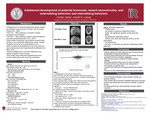
Title: Adolescent development of pubertal hormones, reward neurocircuitry, and externalizing behaviors and internalizing behaviors Authors: Amber Jared & Josiah K. Leong Background: Adolescence is a period of rapid biological and brain development during which changes in pubertal hormones and neural reward systems may increase vulnerability to emotional and behavioral difficulties. Although prior research has documented widespread brain maturation during adolescence, less is known about how specific subcortical reward pathways develop and how these changes relate to hormones and behavior. Methods: Using longitudinal data from the Adolescent Brain Cognitive Development (ABCD) study, this project examines developmental changes in two key brain pathways involved in reward and motivation: connections from the ventral tegmental area and anterior insula to the nucleus accumbens. Structural brain imaging data were analyzed at ages 9-10 as the baseline timepoint in a large national sample. Two year follow-up timepoints were used to analyze functional data of the regions of interest. Four year follow-up timepoints were used to test predictive values for internalizing and externalizing behavior. Internalizing behaviors include depression and anxiety, and externalizing behaviors include aggressive and disruptive behaviors. White matter integrity of these pathways was quantified using diffusion MRI, and longitudinal changes were assessed while accounting for biological sex and puberty onset. Results: Preliminary results from Aim 1 indicate that both reward-related pathways show decreases in structural integrity across adolescence, consistent with ongoing brain reorganization during this developmental window. These changes were observed across hemispheres and did not significantly differ between males and females in early puberty, other than in two sections. Building on these findings, Aim 2 investigates how pubertal hormones, including testosterone and dehydroepiandrosterone (DHEA), are associated with individual differences in reward pathway development and how these hormonal differences moderate the structure-function connection. These data analyses are currently in progress. Aim 3 will then extend this work by analyzing how function can mediate the relationship between brain tract structure and internalizing and externalizing behaviors, while also examining gender differences. Conclusions: Together, this research aims to clarify how hormonal, structural, and functional changes jointly shape the developing adolescent brain. Understanding normative development of reward circuitry may help inform future research on mental health risk, substance use vulnerability, and behavioral regulation, and may support earlier identification of adolescents at heightened risk for maladaptive outcomes.
Publication Date
2026
Document Type
Poster
Degree Name
Bachelor of Science in Biology
Degree Level
Undergraduate
Department
Biological Sciences
Advisor/Mentor
Leong, Josiah
Disciplines
Biology
Keywords
Natural Science
Citation
Jared, A. (2026). Adolescent development of pubertal hormones, reward neurocircuitry, and externalizing behaviors and internalizing behaviors. 2026 Research Poster Competition. Retrieved from https://scholarworks.uark.edu/hnrcsturpc26/8

