


Files
Download Full Text (591 KB)
Date of Graduation
5-2027
Description
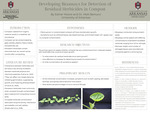
Developing Bioassays for Detection of Residual Herbicides in Compost, the use of synthetic herbicides has dominated the field of agricultural production for over a century. While synthetic herbicide use has resulted in an undeniable boost in agricultural productivity, risks such as environmental degradation and reduced yield of non-target plant species must be considered. Key among these risks is compost contamination, especially from persistent herbicides. After these herbicides are applied, they are absorbed by growing vegetation, consumed by herbivores, passed through the digestive tract, and reintroduced into soil manure based compost. Even after this process, chemicals in such herbicides can remain active months after composting. Sensitive crops, such as pumpkins, may be especially susceptible to injury resulting from herbicide contamination. A greenhouse bioassay will be conducted using Jarrahdale pumpkin seeds to screen compost contaminated with clopyralid at six rates (12.5, 25, 50, 100, 200, and 400 parts per billion) against a nontreated control over four weeks to assess injury such as leaf cupping, epinasty, and abnormal growth, height, leaf number, and fresh and dried biomass. This trial will be organized in a randomized complete block design with four replicates and repeated in fall 2026. This research project aims to determine the extent to which residual toxins from compost contaminated with the herbicide clopyralid stunts plant growth; the effectiveness of bioassays for detecting low levels of contamination in compost; the symptoms plants experience due to compost contamination; and the concentration at which these symptoms begin to occur. This research will provide valuable insight into the risk contaminated compost poses to soil health and plant growth. The results of this research have the potential to aid in developing regulations for herbicide application rates that prevent loss in crop yield without harming the surrounding environment. Furthermore, it will offer effective methods to detect residual herbicide contamination in compost and other soil amendments to allow for more efficient and effective management practices.
Publication Date
2026
Document Type
Poster
Degree Name
Bachelor of Science in Agriculture
Degree Level
Undergraduate
Department
Crop, Soil & Environmental Sciences
Advisor/Mentor
Bertucci, Matt
Disciplines
Agriculture | Environmental Sciences
Keywords
Natural Science
Citation
Moore, E. (2026). Developing Bioassays for Detection of Residual Herbicides in Compost. 2026 Research Poster Competition. Retrieved from https://scholarworks.uark.edu/hnrcsturpc26/82

