


Files
Download Full Text (705 KB)
Date of Graduation
5-2026
Description
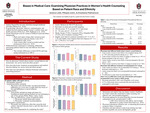
As modern healthcare moves towards a focus on personalized medicine, an evaluation of current provider practices is essential to evaluating quality of care. Numerous studies have shown that physicians exhibit stereotyping and implicit bias with patients, but much remains unknown about the extent this impacts women’s health counseling. The presence of stereotyping could affect women’s health outcomes, as decisions such as choosing to prescribe hormonal contraceptives have numerous physical and emotional side effects. This study aimed to assess how stereotyping contributes to physicians’ perceptions and medical decisions for women seeking gynecological care. Clinical vignettes were given to physicians showing women of four different racial categories, and physicians were asked to rate their attitudes and professional recommendations for each hypothetical patient. If physicians chose to prescribe hormonal contraceptives, they were also asked which type they recommend. The study found that race was associated with significant differences in physicians’ perceptions of women and physicians’ medical decisions. Specifically, Asian women were perceived as less likely to be promiscuous, and physicians were less likely to recommend STD testing or hormonal contraceptives to this group. Other significant differences were also seen between White, Black, and Latina women across multiple physician ratings. Notably, for hormonal contraceptive prescriptions the majority of physicians prescribed their favorite form of contraceptive to all women. These results reveal that physicians may be making biased assumptions and health decisions for women without considering their individual needs, preferences, and autonomy. Further, some physicians may be promoting their favorite treatments to patients without considering alternative options. This study shows a need to educate physicians on stereotyping, implicit bias, and health counseling to promote an individualized approach to gynecological care, especially amongst patients of diverse backgrounds. This can improve women’s health outcomes and the quality of their care across demographic groups.
Publication Date
2026
Document Type
Poster
Degree Name
Bachelor of Science in Psychology
Degree Level
Undergraduate
Department
Psychological Science
Advisor/Mentor
Makhanova, Anastasia
Disciplines
Psychology
Keywords
Social Science
Citation
Lobb, J. (2026). Biases in Prescribing Practices: Examining Physician Stereotyping in Women's Health Counseling Based on Patient Race and Perceptions of Promiscuity. 2026 Research Poster Competition. Retrieved from https://scholarworks.uark.edu/hnrcsturpc26/9

