


Files
Download Full Text (1.6 MB)
Date of Graduation
5-2026
Description
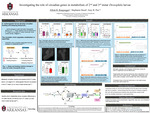
Connecting deficits in circadian rhythm machinery to the severity of other health conditions is a common task that chronobiology, the study of physiological rhythms, undertakes. Disruptions to circadian rhythms and sleep are linked to increased risk of developing multiple different diseases, including Alzheimer’s Disease and obesity. Circadian rhythms are expressed at the molecular level through rhythmic variations in the concentration of specific proteins. While the central clock genes that produce these proteins, such as period and timeless, are evolutionarily conserved across the animal kingdom, not much is known about the consequences of disruptions in circadian rhythm machinery during early development, notably when feeding patterns come under circadian control. Our previous findings indicate that Drosophila sleep and feeding rhythms come under circadian control at the early 3rd instar (L3) larval stage. However, it is not known whether larval metabolism comes under circadian control at a similar developmental time. Therefore, we examined whether various metabolite levels vary in early 3rd instar larval bodies at various circadian time points using colorimetric analyses, fatty acid methyl ester synthesis, and liquid chromatography-mass spectrometry. Here, we present our triglyceride, glucose, glycogen, trehalose and cholesterol colorimetric measures and fatty acid, phospholipid, and cholesterol profiles of both wildtype and molecular clock mutant L3 larvae. While there were no differences measured in glucose, glycogen, and trehalose, we did observe a diurnal difference in triglyceride concentrations in wildtype L3 and a blunting of this rhythm in clock mutants. Our preliminary results suggest that the central circadian clock may begin to regulate Drosophila metabolism at the early L3 stage. Our findings improve our understanding of developmental metabolism and begin to elucidate the connections between the brain and the body’s metabolism.
Publication Date
2026
Document Type
Poster
Degree Name
Bachelor of Science in Biology
Degree Level
Undergraduate
Department
Biological Sciences
Advisor/Mentor
Poe, Amy
Disciplines
Biology
Keywords
Natural Science
Citation
Ruegsegger, E. (2026). From Chaos to Clockwork: Investigating the Role of Circadian Genes in Metabolic Development of 2nd and 3rd Instar Drosophila Larvae. 2026 Research Poster Competition. Retrieved from https://scholarworks.uark.edu/hnrcsturpc26/10

