


Files
Download Full Text (416 KB)
Date of Graduation
5-2028
Description
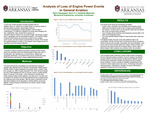
Among different parts of aviation, general aviation (GA) stands out as one of its largest and most vital sectors. GA is defined as any civil aviation activity excluding scheduled commercial flights and military operations. While loss of engine power is a serious subset of general aviation accidents, accounting for more than 200 fatal accidents per year, several gaps remain in our current understanding of these accidents. While current literature includes older studies from 2000-2014, new data from the past decade have not been analyzed for trends yet. With this significant gap of more than a decade in understanding, it is challenging to highlight how trends have evolved over time, and thus necessitates studying the overall improvement or lack thereof from the past decade. Additionally, many studies fail to distinguish between different types of loss-of-engine-power events (partial vs. total vs. fuel-related vs. mechanical), nor do they analyze GA accidents based on factors such as phase of flight, aircraft type, engine type, pilot experience, or geographic and environmental conditions. This makes it harder to discern which factors are most likely to lead to loss of engine power events, and which factors are least likely to recover. This study executes a quantitative and retrospective analysis of accident data obtained from the National Transportation Safety Board’s (NTSB) Aviation Accident Database & Synopses (AVALL) system. The AVALL database provides detailed information about each accident recorded, including accident narratives, probable causes, and coded categorical variables. Preliminary findings include graphs that have been produced to demonstrate that loss of engine power constitutes a substantial proportion of total GA accident events. Additional graphs highlighting the most frequent causes and the top aircraft makes and models associated with these events further suggest non-uniform risk distributions, motivating deeper analysis of future phases of the study. Long-term, this work is intended to serve as a foundation for experimental research. The results of this quantitative analysis will be used to design future simulation-based experiments in our research laboratory, which houses a flight simulator. The findings may inform training practices, maintenance oversight, and policy interventions designed to reduce the risk of such events and improve survivability when they do occur.
Publication Date
2026
Document Type
Poster
Degree Name
Bachelor of Science in Mechanical Engineering
Degree Level
Undergraduate
Department
Mechanical Engineering
Advisor/Mentor
Majumdar, Neelakshi
Disciplines
Engineering | Mechanical Engineering
Keywords
Engineering
Citation
Satappagol, S. (2026). Analysis of Loss of Engine Power Events in General Aviation. 2026 Research Poster Competition. Retrieved from https://scholarworks.uark.edu/hnrcsturpc26/53

