


Files
Download Full Text (935 KB)
Date of Graduation
5-2026
Description
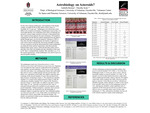
Methanogens on Asteroids? Introduction: It is conceivable that if methanogens, microorganisms in the domain Archaea, exist on Mars, they were seeded there from a piece of Earth that was ejected by a meteor impact sometime in the past, or that material from Mars seeded our home planet by the same mechanism. The hypothesis of panspermia, the idea that life could be transported from one planet to another through space, was first developed by Arrhenius in 1908 (1). Since then, the idea of lithopanspermia, the transfer of organisms in rocks such as meteors and asteroids, has become amenable to testing. Previous research in our lab has demonstrated that certain methanogens can obtain all of their nutrient requirements, other than molecular hydrogen (their energy source), carbon dioxide (their carbon source), and water, from Mars soil simulants and clays identified on Mars, such as JSC Mars-1, montmorillonite, kaolinite, illite, and others (e.g. 2). In the research reported here, certain methanogens were shown to grow on asteroid simulants. Methods: The methanogens tested were Methanothermobacter wolfeii, Methanosarcina barkeri and Methanobacterium formicicum. Following two weeks of growth, cells from each culture were centrifuged and washed with sterile buffer three times to remove residual nutrients from the growth media. Cell pellets were suspended in sterile buffer, then added to anaerobic tubes containing sterile asteroid simulants (0.5g per tube) purchased from Space Resource Technologies. Sterile buffer was added to each tube to reach a final volume of 5 mL. Each tube was pressurized with 2 atm of molecular hydrogen, followed by incubation at each organism’s growth temperature. Methane production, commonly used to measure methanogen growth, was measured by gas chromatography of headspace samples at regular time intervals. Results and Discussion: In two sets of experiments, all three of the methanogens tested showed measurable methane on the two asteroid simulants following incubation. In one set of experiments, cells growing on the asteroid simulants were transferred to fresh sterile tubes containing the same simulants plus buffer. This was done to dilute out any possible residual nutrients carried over from the starting media. So far, all of the methanogens produced methane on one or both asteroid simulants following this second transfer. If these organisms can be transported from Mars to Earth or Earth to Mars on asteroids, this would be extremely relevant to planetary protection. References: (1) Arrhenius, S. (1908) Worlds in the Making: The Evolution of the Universe. New York, Harper and Row. (2) Kral, T.A. et al. (2004) Origins of Life and Evolution of the Biosphere 34: 615-626.
Publication Date
2026
Document Type
Poster
Degree Name
Bachelor of Science in Biology
Degree Level
Undergraduate
Department
Biological Sciences
Advisor/Mentor
Kral, Timothy
Disciplines
Biology
Keywords
Natural Science
Citation
Reimer, I. (2026). Methanogens on Asteroids?. 2026 Research Poster Competition. Retrieved from https://scholarworks.uark.edu/hnrcsturpc26/14

