


Files
Download Full Text (751 KB)
Date of Graduation
5-2026
Description
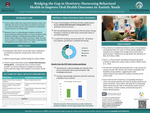
Background: Autistic children have unique dental healthcare needs. Oral complications stemming from poor tongue and motor coordination, high sensitivity to toothpaste and flossing, and sensory reactions to fluoride, amalgam, and other dental products are common. Autistic youth are also prone to dental-related emotional (e.g., dental fear and anxiety) and behavioral (e.g., noncompliance, disruptive behavior, avoidance) symptoms. There is also a substantial gap in pediatric and autism-focused training for dental providers, and caregivers report significant challenges in finding dental practitioners who treat autistic children. Taken together, autistic youth and their families face barriers to accessing timely, equitable oral healthcare. Unfortunately, delayed oral healthcare may increase the likelihood of distressing and invasive dental procedures for autistic children. Child behavioral symptoms combined with limited pediatric training among providers may result in a pattern of negative dental interactions, which impacts child and family engagement in oral healthcare more broadly. Objectives: This project will utilize extant literature to conceptualize child, family, and provider factors implicated in oral healthcare disparities among autistic youth and their families. We will present a novel intervention project funded by the National Institute of Dental and Craniofacial Research/National Institutes of Health, which aims to enhance dental providers' non-invasive behavioral strategies by teaching positive skills that target child compliance and comfort during visits. Methods: A systematic review of peer-reviewed research was conducted to conceptualize factors implicated in the oral healthcare experiences of autistic children. In response to the gap in training for dental providers, a team of psychologists and dental providers collaborated to developDental-Child Interaction Training (DCIT), a research-informed training program drawing on principles from Parent-Child Interaction Therapy. Dental providers (N = 10) in a southern state participated in a pilot training focused on child behavioral health principles. Workshop outcome measures included skills assessments, provider satisfaction with the training, qualitative feedback, and the Usage Rating Profile-Intervention. Results: Findings from the literature review underscored a complex interaction of child, family, and provider factors implicated in oral health care treatment disparities among autistic youth. The findings also supported the utility of behavioral interventions among general pediatric healthcare providers and the extension of applied trainings to dental practitioners. Initial results from the DCIT training workshop reflected improvements in skills knowledge and utilization among participating dental providers from the pre-training (M =62) to post-training (M = 88) knowledge assessment. Providers also reported high rates of satisfaction with the training. Conclusions: There is a critical need for specialized training among dental providers to address the unique needs of autistic children. The pilot DCIT workshop demonstrated that a one-day training can improve provider skills. Results also showed acceptability and feasibility among providers, suggesting that wider implementation could enhance the quality of dental care for autistic youth. In the coming years, DCIT will be expanding trainings to reduce oral health disparities and improve dental experiences for youth and families. Future efforts will adapt DCIT to specifically address dental provider skills in working with autistic youth to reduce distress, increase comfort, and promote long-term positive dental practices.
Publication Date
2026
Document Type
Poster
Degree Name
Bachelor of Science in Psychology
Degree Level
Undergraduate
Department
Psychological Science
Advisor/Mentor
Quetsch, Lauren
Disciplines
Dentistry | Social and Behavioral Sciences
Keywords
Social Science, Health
Citation
Richardson, S. (2026). Bridging the Gap in Dentistry: Harnessing Behavioral Health to Improve Oral Health Outcomes for Autistic Youth. 2026 Research Poster Competition. Retrieved from https://scholarworks.uark.edu/hnrcsturpc26/24

