


Files
Download Full Text (545 KB)
Date of Graduation
5-2027
Description
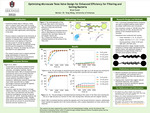
Invented by Nikola Tesla in 1920, a Tesla valve is a passive check valve with no moving parts but showing diodicity for fluids (i.e., allowing fluids to flow easily in one direction but not in the other). Tesla valves have demonstrated remarkable versatility across a range of scientific fields. Recently, a study conducted at the University of Arkansas showed that these conduits exhibited diodicity for bacteria in the absence of fluid flows (Rogers et al. 2023), serving as proof of concept for applying microscale Tesla valves for filtering and sorting bacteria and microorganisms in biomedical settings. However, the design of the microscale Tesla valve has not been optimized for such applications. In this project, I aim to vary the geometric parameters of the microscale Tesla valve and computationally optimize it for filtering and sorting bacteria. To accomplish this, I will perform numerical simulations in Python for bacteria moving in a microscale Tesla value with different geometric parameters. The bacteria will be modeled as active Brownian particles (Volpe et al. 2014) with a broad range of initial positions, linear velocities, angular velocities, and translational and rotational diffusion coefficients. The geometric parameters of the Tesla valve that we will vary include the channel width, number of valve loops, internal valve angle, and end-pool diameters. For each set of parameters, 96 simulations will be run, and the results will be analyzed statistically. The results from this study are expected to provide valuable insights for future work in the fields of biology and applied physics.
Publication Date
2026
Document Type
Poster
Degree Name
Bachelor of Science in Physics
Degree Level
Undergraduate
Department
Physics
Advisor/Mentor
Wang, Yong
Disciplines
Physics
Keywords
Natural Science
Citation
Ewalt, B. (2026). Optimizing Microscale Tesla Valve Design for Enhanced Efficiency for Filtering and Sorting Bacteria. 2026 Research Poster Competition. Retrieved from https://scholarworks.uark.edu/hnrcsturpc26/22

