


Files
Download Full Text (525 KB)
Date of Graduation
5-2026
Description
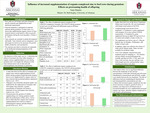
The objective of this study is to determine the effect of zinc supplementation in cattle feed on beef cattle during gestation and the influences of the trace mineral zinc on colostrum and calf immunocompetence measuring immunoglobulin concentrations and body weight. Cow-calf systems rely on the effectiveness and consistency of their nutritional intake. Beef cattle are fed forages and grain alongside specific minerals and supplements to meet nutritional requirements. The effectiveness of these trace minerals added to the diet helps to ensure that the animal gets the most out of its feed and the producer gets the most out of the animal. Factors being analyzed are inorganic and organic zinc concentrations, colostrum quality, and calf body weight. The experiment is quantitative and will utilize randomized experimentation and sampling. Pregnant cows (n=83) will be allotted to 4 groups based on, sire of heifer calf, cow age, and cow BW taken at weaning. Assigned groups received one of two treatments: 1) Treatment A will be a grain supplement with inorganic Zn (Diet B138) to meet current NASEM requirements, 2) Treatment B will be a grain supplement containing an additional 369 mg/d of Zn as Zn amino acid complex (Zinpro Availa Zn) (Diet B139). Groups 1 and 4 receive Treatment A. Groups 2 and 3 receive Treatment B. Supplement fed at a rate of 3lb a head per day on Mondays, Wednesdays, and Fridays of each week. Blood samples were collected from dams at days 56 and 84 of experiment, from calves’ blood is collected at 48 hours after birth. Blood collected from dams via jugular venipuncture using tiger-striped tubes, and serum is frozen, and blood collected from calves via jugular venipuncture using tiger-striped and purple topped tubes. After calving, and after calf has nursed, cows move to chute for colostrum collection. Colostrum is then tested using ELISE IgG and IgA assay kits for immunoglobin concentrations. Red top tubes were spun down for serum extractions and used for IgA and IgG analysis using ELISA kit. All treatment cows will have dystocia scores (difficulty of labor) , calf vigor scores, and calf birth weights recorded, along with any morbidity or treatment incidents during the gestational or lactational periods. Results are not available at present. Through previous research, it is predicted that organic supplementation on gestational cows will affect their post-natal calves, potentially increasing immunoglobulin concentration in calf blood and in cows’ colostrum.
Publication Date
2026
Document Type
Poster
Degree Name
Bachelor of Science in Agriculture
Degree Level
Undergraduate
Department
Animal Science
Advisor/Mentor
Kegley, Beth
Disciplines
Animal Sciences
Keywords
Natural Science
Citation
Sharpley, N. (2026). Effect of organic vs inorganic zinc sources in beef cattle diets during gestation on calf immune function and colostrum quality. 2026 Research Poster Competition. Retrieved from https://scholarworks.uark.edu/hnrcsturpc26/41

