


Files
Download Full Text (539 KB)
Date of Graduation
5-2026
Description
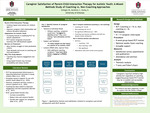
Though few family-based interventions exist to address disruptive behaviors with Autistic youth, one such treatment, Parent-Child Interaction Therapy (PCIT), has a growing body of evidence to suggest that it can be used with Autistic families to promote positive caregiver-child interactions and reduce child aggression or defiance (Scudder et al., in press). However, to date, a standardized protocol to use with Autistic youth (PCIT-Autism) has not been outlined or tested to ensure that the needs of Autistic youth and families are adequately met. Based on feedback from an Autism Community Advisory Board, where Autistic community members and their families communicated their wants for a family-focused psychological intervention (Quetsch et al., under review), PCIT-Autism (Shah et al., in prep) is an 8-week intervention that combines (1) once weekly 90-minute in-person parent-only group sessions to build parenting skills with (2) once weekly 30-minute telehealth, live coaching sessions for extra support and guidance. This present mixed-methods study aimed to assess whether a less intensive version of the intervention that omits the coaching component yields higher caregiver satisfaction compared to the more intensive, coaching-inclusive model. Caregivers of Autistic youth were randomly assigned to a coaching group (n = 9) or to a non-coaching group (n = 8). English-speaking caregivers with Autistic children between ages 2.5-10 years of age were eligible to participate in the study. Caregivers who identified as Autistic themselves (ncoach = 1, nno-coach = 2) and caregivers of minimally speaking children (ncoach = 6, nno-coach = 4) were included in the study. After participating in the 8-week PCIT-Autism protocol, all caregivers completed a Group Satisfaction Survey, which consisted of 14 quantitative items in which caregivers were asked to rate the degree to which they agreed with each statement (e.g., I feel that my needs as a caregiver of an Autistic child were adequately addressed in the parent skills group) on a 5-point scale (1 = Strongly Disagree to 5 = Strongly Agree). Caregivers were also asked to provide feedback on 7 qualitative items (e.g., Please describe your overall experience participating in the parenting skills group in a few short sentences), which allowed caregivers to share specific thoughts and experiences regarding the group. Mixed-methods analyses (i.e., independent samples t-test, thematic analysis) were used to examine perspectives of caregivers who (1) received coaching or (2) did not receive coaching. Results indicated no significant quantitative difference in caregiver satisfaction between the PCIT-Autism with coaching group (M = 61.00, SD = 7.35) and the PCIT-Autism without coaching group (M = 62.00, SD = 10.23), t(14) = -.255, p = .826. However, qualitative feedback suggests that caregivers perceive distinct benefits of caregiver coaching. The current study will discuss outcomes and themes from this pilot trial, how caregiver feedback can inform adaptations to improve engagement and feasibility of PCIT-Autism, and next steps in clinical trials.
Publication Date
2026
Document Type
Poster
Degree Name
Bachelor of Science in Psychology
Degree Level
Undergraduate
Department
Psychological Science
Advisor/Mentor
Quetsch, Lauren
Disciplines
Psychology
Keywords
Natural Science
Citation
Schlegel, M., & Kendrick, C. (2026). Caregiver Satisfaction of Parent-Child Interaction Therapy with Autistic Youth: A Mixed-Methods Study of Coaching vs. Non-Coaching Approaches. 2026 Research Poster Competition. Retrieved from https://scholarworks.uark.edu/hnrcsturpc26/4

