


Files
Download Full Text (877 KB)
Date of Graduation
5-2027
Description
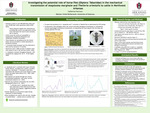
The cattle industry in Arkansas plays a significant role in the state’s agricultural economy; however, two emerging infectious diseases pose a threat to cattle health, producer livelihood, and animal welfare. The two diseases, anaplasmosis and theileriosis, are caused by organisms that enter the host’s bloodstream and infect red blood cells, leading to destruction of said cells. The shared symptoms of both diseases are fever, weakness, anemia (low red blood cell count), reduced productivity, weight loss, and possibly death. An important difference between symptoms is that, unlike anaplasmosis, theileriosis can cause abortion in cattle. Both diseases are known to spread through ticks and contaminated equipment, but the potential of biting flies (specifically horseflies) spreading disease remains poorly understood. This knowledge gap limits the effectiveness of current disease prevention and management strategies. The goal of this research is to evaluate if horseflies collected from environments with cattle nearby in Northwest Arkansas carry the organisms responsible for anaplasmosis (Anaplasma marginale) and theileriosis (Theileria orientalis), and to assess whether these flies may contribute to disease transmission. From June 2025 to September 2025, horseflies were collected weekly with industrial fly traps at three environmentally distinct cattle locations: a university-managed cow-calf unit, a pasture next to a river, and a privately owned cattle operation. These areas were selected based on ecological differences, with knowledge of horsefly environmental preferences in mind, and confirmed/suspected disease presence in cattle. The collected flies, 186 in total, were identified by species and will be analyzed using DNA-based laboratory testing to detect the presence of the disease-causing organisms. To understand how transmission may occur, each fly will be separated into head and body sections before DNA tests are run. This approach will help determine whether pathogens are only present on the fly’s mouthparts, indicating mechanical spread of disease, or within the body, suggesting a deeper biological association with disease transmission. This research will provide new views into whether biting flies play a role in the spread of anaplasmosis and theileriosis among cattle. The findings could help producers and veterinarians in making more informed decisions about fly control and disease prevention. Additionally, this research contributes to a better understanding of how these potential disease-transmitting organisms interact with their physical environment in livestock systems, highlighting the importance of investigating overlooked transmission pathways. By addressing a real-world agricultural problem, this project supports improved animal welfare, stronger biosecurity practices, and long-term stability of Arkansas’s cattle industry.
Publication Date
2026
Document Type
Poster
Degree Name
Bachelor of Science in Agriculture
Degree Level
Undergraduate
Department
Animal Science
Advisor/Mentor
McDermott, Emily
Disciplines
Animal Sciences
Keywords
Natural Science
Citation
Harrison, C. (2026). Investigating the potential role of horse flies (Diptera: Tabanidae) in the mechanical transmission of Anaplasma marginale and Theileria orientalis to cattle in Northwest Arkansas. 2026 Research Poster Competition. Retrieved from https://scholarworks.uark.edu/hnrcsturpc26/42

