


Files
Download Full Text (647 KB)
Date of Graduation
5-2026
Description
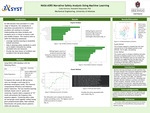
Unmanned Aerial Vehicles (UAVs) are rapidly evolving and being integrated into a wide range of applications, from commercial deliveries to police surveillance and recreational use. As UAVs become more prevalent, the complexity of operations and potential for incidents or accidents will continue to increase. Understanding why these incidents and accidents occur is critical to ensure safe and reliable drone operations as the industry continues to grow. To combat these issues, it is invaluable to analyze UAV incidents quantifiably to identify leading causes and risks in a streamlined and efficient matter. Current manual reporting systems often struggle with the sheer volume of data generating from the growing drone sector. Analyzing each individual report is time consuming calling for strict technical expertise to identify causes without allowing subjectivity to sway conclusions. My research aims to leverage machine learning using Google Colab to analyze drone incidents and accidents by providing narratives from NASA’s Aviation Safety Reporting System (ASRS). This database provides a vast library of voluntary reports allowing for raw and more detailed reports than a typical database by reliving the operator or witness from any legal penalty. Machine learning can highlight patterns and sift through these intricate reports much faster than a human, reducing the analysis period dramatically. Narratives that have previously been analyzed will be used as a check to ensure that the machine learning algorithm is correctly categorizing and analyzing the given narratives providing an accurate output that can be used for future prevention. The big advantage to machine learning is that once the algorithm has been taught it can be used for multiple drone sections or parts given the necessary information is provided. By combining human factors analysis with machine learning, this research aims to bridge gaps in understanding UAV operational risks and demonstrate how machine learning can improve UAV analysis efficiency and assist in preventing future incidents.
Publication Date
2026
Document Type
Poster
Degree Name
Bachelor of Science in Mechanical Engineering
Degree Level
Undergraduate
Department
Mechanical Engineering
Advisor/Mentor
Majumdar, Neelakshi
Disciplines
Engineering | Mechanical Engineering
Keywords
Engineering
Citation
Harrison, C. (2026). Unmanned Aircraft Vehicle Safety Reporting and Analysis of Incidents Utilizing Machine Learning. 2026 Research Poster Competition. Retrieved from https://scholarworks.uark.edu/hnrcsturpc26/67

