


Files
Download Full Text (1.5 MB)
Date of Graduation
5-2026
Description
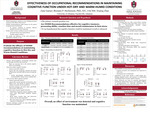
National Institute for Occupational Safety and Health (NIOSH) recommendations dictate heat safety practices in occupations throughout the United States. Currently, the effectiveness of these recommendations is unknown. Likewise, there is a lack of consensus regarding the effect of combined heat and exercise stress on cognitive function. PURPOSE: To examine the effectiveness of NIOSH heat safety recommendations in maintaining cognitive function after moderate work in the heat, alongside whether the type of heat has any effect. METHODS: A counter balanced, repeated measures, randomized controlled trial was conducted to evaluate differences in cognitive function in two distinct environments. Participants completed two experimental trials. Participants collected urine for 24-hr prior to trials to verify euhydration Urine was analyzed via urine specific gravity (USG) and osmolality. Hydration status was measured before and immediately after exercise. Participants measured nude body mass, self-inserteda rectal thermistor and donned a heart rate monitor. Thereafter, they completed cognitive testing in a hot environment. The cognitive test battery included: an encode-delay-free recall test, a Sternberg task, and a Stroop test. Participants completed these tests before and after exercise. Our two experimental conditions consisted of a warm-humid (30ºC; 80% RH; WH) condition and a hot-dry (40.6ºC; 20% RH; HD) condition. Participants exercised for 2 hours total in both conditions. Utilizing a two-way ANOVA, relationships between variables at different times (pre-exercise and post-exercise), different conditions (HD and WH), and a possible interaction of Time x Condition were explored. Variables included aspects of long-term memory, such as total recall amount and accuracy, short term memory, like accuracy and mean response time, and processing ability, including the Stroop effect. RESULTS: Specifically, no significant differences were found between WH and HD conditions or interaction of time and condition. However, significant differences were found from pre- to post-exercise in short term memory and processing capability. In terms of short-term memory, significant differences were found in mean response time for both present (p=0.030) and absent (p=0.047) Sternberg test trials, as both improved from pre- to post-exercise, although no significant difference was found in overall accuracy (p=0.515). A significant difference in Stroop effect (p=0.030), where individuals were found to decrease the difference in response times to congruent and incongruent trials from pretopost-exercise was found. No significant differences were found in long term memory overtime. CONCLUSION: Simulated moderate intensity work in HD and WH conditions did not greatly affect tested aspects of cognition, indicating that NIOSH recommendations are effective in maintaining such aspects. Identified differences are possibly due to a learning effect, as the differences improved from pre- to post-exercise. It follows that moderate work in heat environments had little negative effect. Further work should consider the possibility of eustress positively affecting cognition when effective heat stress recommendations are upheld. PRACTICAL APPLICATION: Seeing as NIOSH heat safety and hydration guidelines were effective at maintaining cognitive function during simulated moderate intensity work under hot environments, they are supported for worker safety across the country.
Publication Date
2026
Document Type
Poster
Degree Name
Bachelor of Science in Biology
Degree Level
Undergraduate
Department
Biological Sciences
Advisor/Mentor
McDermott, Brendon
Disciplines
Biology
Keywords
Health
Citation
Garner, Z. (2026). Effectiveness of Occupational Recommendations in Maintaining Cognitive Function Under Hot-Dry and Warm-Humid Conditions. 2026 Research Poster Competition. Retrieved from https://scholarworks.uark.edu/hnrcsturpc26/74

