


Files
Download Full Text (810 KB)
Date of Graduation
5-2029
Description
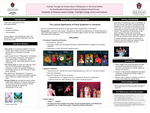
Ornamental flowering plants have been instrumental symbols in literature across all times and cultures. I’m examining why flowers are such perceptual stimulants, sexual symbols, and literary agents. Through the lens of Joela Jacob’s term “phytopoetics,” which describes the impact of plant life on the human imagination and culture; botany; and literary scholarship, I will look closely at this phenomenon in The Peony Pavilion, a Chinese opera from 1598 which features the first recognized complex and convincing female protagonist in world literature. Exploring “the garden” as a place, I will present the embodied, sensory, and relational elements of the human-flower relationship using the striking visual of Tang Xianzu’s revolutionary production. I find that, just as we perceive the costumes and makeup of the opera as giving traits to the characters, we find that the embodied aesthetics of flowers lead us to assign the same conclusive “personalities” to plants. My presentation aspires to make an audience examine their personal relationships with the natural world and consider how extensive the human encounter with flowering plants has been throughout literature, art, and social movements. I hope to eradicate a misconception of flowers in literature: that they’re passive and static, included by authors to be symbolic or even purely decorative. This can be easily disproven by simply taking a closer look at the ever-shifting impact of flowers on the human imagination as their true, dynamic nature can be found in some of the oldest surviving literary and artistic works. The flowers in The Peony Pavilion are more than just a beautiful setting: they are active participants in the narrative and, even more remarkably, proponents of gendered resistance.
Publication Date
2026
Document Type
Poster
Degree Name
Bachelor of Arts in English
Degree Level
Undergraduate
Department
English
Advisor/Mentor
Gray, Laura
Disciplines
Arts and Humanities | English Language and Literature
Keywords
Humanities
Citation
Bussell Escoto, M. (2026). "Leafing" through the Chinese Opera: Phytopoetics in The Peony Pavilion. 2026 Research Poster Competition. Retrieved from https://scholarworks.uark.edu/hnrcsturpc26/83

