


Files
Download Full Text (1.7 MB)
Date of Graduation
5-2027
Description
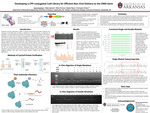
Duchenne muscular dystrophy, or DMD, is a genetic neuromuscular disorder caused by the mutation of the DMD gene, resulting in alterations in the functionality or production of dystrophin, a protein essential to maintain muscle fiber integrity and strength. This mutation leads to progressive muscle degeneration, causing motor loss, cardiopulmonary failure, and ultimately, premature death. Gene therapies using CRISPR aim to replace the mutated gene to provide long-term correction. Although this has promise, CRISPR-based therapies use a viral vector to deliver, which presents notable challenges, such as immune problems and liver toxicity. A non-viral delivery method is a viable approach, but does not yet provide efficient targeting to skeletal muscles. This study aims to offer an innovative solution by developing a “self-delivering” gene-editor that presents the needed efficacy and target-specific delivery. The vector I am using is SpCas9 conjugated to cell-penetrating peptides (CPP) that would allow direct delivery to reframe the DMD gene and prevent many of the unwanted side effects of using a viral vector, such as combating uncontrolled DNA integration and reducing immune responses. We designed modified CRISPR CysSpCas9 proteins with binding sites for cell-penetrating peptides. We first determined we needed binding sites that are surface-exposed and least likely to interfere with the activity of the protein. Using solvent-accessible surface area analysis, we found six sites (S204, V743, K755, R1078, L551, L291) that met these requirements. These six sites were mutated individually (and as 15 dual-mutant permutations) into cysteine, to allow for the CPP conjugation. Leveraging cysteine’s disulfide chemistry, we synthesized CPPs to include a maleimide group that would react with cysteine’s thiol group, creating a stable disulfide bond. Via this chemistry, a CPP will conjugate to a site with a cysteine molecule, facilitating direct cellular delivery. The modified SpCas9 protein variants were overexpressed in E. coli bacterial cultures and purified using Nickel-Sepharose affinity chromatography. We used a precast 7.5% SDS-PAGE gel to confirm successful overexpression and purification by observing a 160kDa SpCas9 band. In vitro digestion (IVD) is a DNA cleavage assay that we used to validate our SpCas9 variants. After running a 2% TAE agarose gel, we would expect to see a DNA band at 913bp and a cleaved band at 791bp. Our IVD data concluded that five of the SpCas9 single variants, except K755C, and all the double variants retained functional cleavage integrity.Our results will demonstrate that non-viral, non-immunogenic deliveries with persistent SpCas9 activity and enhanced tissue specificity are achievable, making this method ideal for gene delivery in skeletal muscles. This strategy could have applications not limited to DMD but also in a wide range of other genetic diseases. Future work would explore the functionality of triple and quadruple mutations to have the ability to attach more than one CPP to SpCas9, forming a library. This work represents a promising step toward overcoming the limitations of viral vectors by offering a targeted, efficient, and safe non-viral gene delivery platform for skeletal muscle applications.
Publication Date
2026
Document Type
Poster
Degree Name
Bachelor of Science in Biomedical Engineering
Degree Level
Undergraduate
Department
Biomedical Engineering
Advisor/Mentor
Nelson, Christopher
Disciplines
Biomedical Engineering and Bioengineering
Keywords
Engineering, Medical
Citation
Donathan, A. (2026). Developing a CPP-conjugated Cas9 Library for Efficient Non-Viral Delivery to the DMD Gene. 2026 Research Poster Competition. Retrieved from https://scholarworks.uark.edu/hnrcsturpc26/86

