


Files
Download Full Text (809 KB)
Date of Graduation
5-2026
Description
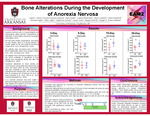
Background: Anorexia nervosa (AN) is a psychological and physiological eating disorder characterized by calorie restriction, fear of gaining weight, and disturbances in body image. It has many negative effects on health and physical functioning, specifically bone health; however, it is unknown how bone health is affected throughout the development of AN and how reliable bone density is as a sole method to determine energy status in AN. Purpose: Investigate how bone health is affected over the development of AN and how reliable bone density is as a sole method to determine energy status in AN. Methodology: All methods were approved by the University of Arkansas Institutional Animal Care and Use Committee (AUP 24011). 8-week-old, female Sprague Dawley rats (n=6-12 rats/group) were divided into control (CON) and AN groups within each timepoint (3-, 5-, 15-, and 30-day). Their age and sex roughly corresponds to the human age (teenage to young adult years) and sex (female) affected by AN in rats, and larger samples (~9-12 rats) were used for 3- and 5-day timepoints, as subtler changes were anticipated, and smaller samples (~6-9 rats) were used for 15- and 30-day timepoints, where larger changes were expected. All rats were housed in a temperature (~23°C) controlled and 12:12 light-dark cycle animal facility. AN rats underwent simulated AN (~50-60% ad libitum consumption) for their designated timepoint to reflect the calorie restriction of AN while CON rats maintained their ad libitum diets. Before AN and after designated timepoints, all rats underwent peripheral quantitative computed tomography (pQCT) to assess bone health, specifically total bone density and trabecular density. Data was divided into groups and timepoints (CON and AN; 3-, 5-, 15-, and 30-day) and statistically analyzed using pre-planned t-tests with a Holm’s adjustment and SAS to compare the AN rats to the CON rats at each timepoint. To control for possible baseline differences, baseline values were used as a covariate. Significance was denoted at p< 0.05. Results: At 3 days, total density and trabecular density were not significantly different in AN and CON rats (p=0.9598 and p=0.2508, respectively). At 5 days, there was still no significant difference in total density and trabecular density of AN and CON rats (p=0.0700 and p=0.1446, respectively). At 15 days, there was significant difference in total density but not trabecular density of AN and CON rats (p=0.0003 and p=0.1965, respectively). At 30 days, total density and trabecular density were statistically different in AN and CON rats (p< 0.0001). Discussion: Bone health deteriorates gradually over the course of AN. By the time bone loss is detected, energy deficiency is already established. Therefore, bone health should not be used as a sole method to determine energy status during AN.
Funding Source: Honors College Research Grant, AIMRC Center for Biomedical Research Excellence (COBRE) grant (5P20GM139768, M.E.R).
Publication Date
2026
Document Type
Book
Degree Name
Bachelor of Science in Exercise Science
Degree Level
Undergraduate
Department
Health, Human Performance and Recreation
Advisor/Mentor
Rosa-Caldwell, Megan
Committee Member
Schmitt, Abigail
Disciplines
Animal Experimentation and Research | Exercise Science | Musculoskeletal System | Other Nutrition
Keywords
Research-Based
Citation
Wood, K., Austin, S., Brockman, L., Canard, G., Greenhill, C., Habib, A., Jafari, M., Schultz, C., Vicen, O., Schmitt, A., & Rosa-Caldwell, M. (2026). Bone Alterations During the Development of Anorexia Nervosa. 2026 Honors Symposium. Retrieved from https://scholarworks.uark.edu/coesym26/18
Included in
Animal Experimentation and Research Commons, Exercise Science Commons, Musculoskeletal System Commons, Other Nutrition Commons

