


Files
Download Full Text (583 KB)
Date of Graduation
5-2026
Description
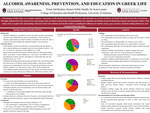
Background: Alcohol consumption is normalized in Greek Life culture, and this social standard can lead to risky health behaviors and overconsumption. At the University of Arkansas, approximately one-third of students are members of Greek Life; there is a need for prevention methods that understand students’ lived experiences. Purpose: The purpose of this study is to examine students’ experiences with alcohol prevention, awareness, and education as current members of Greek Life at the University of Arkansas. Through student interviews and surveys, this project aims to inform and provide recommendations for relatable and student-centered alcohol prevention and education efforts. Methodology: This study used a mixed-methods, cross-sectional design. Participants were obtained using convenience sampling (n=10). All participants were informed of the purpose and procedure of the study. Ten students volunteered to participate, half in sororities and half in fraternities. Multiple Greek Life organizations were represented to allow for a variety of perspectives. Quantitative data were collected through an anonymous survey focused on alcohol consumption patterns, perceived preparedness, previous education efforts, and opinions on alcohol prevention. Each student answered all survey questions before participating in the interview. Qualitative data was taken in the form of in-person, semi-structured interviews addressing personal experiences, emotions, and relationships formed with alcohol. Survey and interview questions were developed based on established constructs in alcohol research, supporting content validity. A combination of closed-ended (multiple choice and Likert scale) and open-ended questions was included to capture participants’ perspectives and experiences. In order to enhance reliability, a consistent question structure was enforced along with standardized administration procedures. Quantitative data were reviewed using descriptive statistics, and qualitative data were coded for recurring themes. Results: The final subject pool (n=10) was 50% male and 50% female. Fifty percent of participants reported drinking at least once per week, with 50% consuming three drinks on average and 30% reporting 6+ drinks per sitting. The main influence on drinking habits was “friends or peers” (80%). Forty percent of participants agreed that alcohol is an expected part of Greek life, and 80% of participants stated they received education related to alcohol from their organization. Qualitative findings revealed themes of negative academic and social consequences, with a desire for a more personal form of education. Multiple participants expressed the desire for a better understanding of Greek Life and its relationship with alcohol. Discussion: Findings suggest that perceived drinking norms and peer influences contribute to drinking behaviors. Multiple students reported high alcohol consumption and high pressures to drink, and these findings suggest a disconnect between knowledge and behavior. Qualitative findings suggest that alcohol education should move beyond awareness alone and focus on practical, student-centered resources that address real-life decision making.
Publication Date
2026
Document Type
Book
Degree Name
Bachelor of Science in Public Health
Degree Level
Undergraduate
Department
Health, Human Performance and Recreation
Advisor/Mentor
Lasater, Kara
Committee Member
Dobbs, Page
Disciplines
Substance Abuse and Addiction
Keywords
Research-Based
Citation
McMechen, V. J., Lasater, K. A., & Dobbs, P. (2026). Alcohol Awareness, Prevention, and Education in Greek Life. 2026 Honors Symposium. Retrieved from https://scholarworks.uark.edu/coesym26/10

