


Files
Download Full Text (731 KB)
Date of Graduation
5-2027
Description
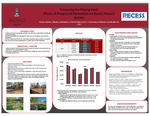
Background: Children in recent years have become increasingly sedentary, which poses major risks to their health and overall well-being. Recess is a point of interest in the field of exercise science, as research has found increased recess time is associated with increased levels of PA, but little is known on how the quality of recess, such as playground structures, affects physical activity. Purpose: The aim of my study is to investigate if there is a significant change in physical activity habits during recess among elementary school students due to a change in playground play structures and surfaces, in the form of a case study following the complete renovation of one elementary school in Fayetteville’s playground. Methods: A large team and I have collected data through the System of Observing Play and Leisure Activity in Youth (SOPLAY) (McKenzie 2000) for physical activity habits for the past two years, one year before the renovation, and one year after. All children at the playground were observed anonymously, with principal approval and human subjects' exemption approval from the University of Arkansas IRB. Through the SOPLAY method, PA can be categorized into three different levels of intensity, sedentary, walking (encompassing light and moderate), or vigorous. The SOPLAY method is coded with PA intensities in real time by trained individuals. The individuals follow a strict training protocol that confirms accuracy of coded activity through a series of YouTube training videos. After data was collected, t-tests were performed to determine changes in physical activity levels of students in the school at both points in time. Results: A total of 22,829 scans have been completed. For girls, the percentage of walking increased from before to after (33.6% vs 35.4%, p=0.02) the renovation and sedentary time decreased (43.9% vs 41.1%, p< .001). There were no differences in girls’ vigorous physical activity before and after (22.5% vs 23.5%, p=0.11) the renovation. For boys, there were no changes in walking (36.7% vs 37.7%, p=0.15), sedentary (35.8% vs 34.6%, p=0.09) or vigorous (27.5% vs 27.8%, p=0.74) physical activity before or after the renovation. Discussion: The results suggest playground renovation at this elementary school had the greatest impact among girls, by significantly reducing their sedentary levels and increasing walking levels. However, no significant difference in vigorous PA was found for either gender; furthermore, boys had no significant change in any intensities of PA due to the playground modernization. The findings of this study suggest that modernization of play structures may re-engage girls into more PA, but future interventions should incorporate more diverse equipment, or structured play to effectively promote higher-intensity PA across a more diverse student population.
Publication Date
2026
Document Type
Book
Degree Name
Bachelor of Science in Exercise Science
Degree Level
Undergraduate
Department
Health, Human Performance and Recreation
Advisor/Mentor
Howie, Erin
Disciplines
Exercise Science
Keywords
Recess; Physical Activity; SOPLAY; MVPA
Citation
Parsley, H. M. (2026). Enhancing the Playing Field: Effects of Playground Renovation on Recess Physical Activity. 2026 Honors Symposium. Retrieved from https://scholarworks.uark.edu/coesym26/17

