


Files
Download Full Text (502 KB)
Date of Graduation
5-2026
Description
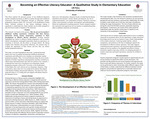
Background: This thesis explores the personal journey of one childhood education teacher candidate becoming an effective teacher through both childhood experiences and formal preparation through an elementary teacher preparation program within a R1 University in the Southeastern United States. Arkansas continues to face literacy challenges making it significant to understand how future teachers can be better prepared to face the diverse needs of students in the classroom. Purpose: This research was based on the question: How do pre-service teachers’ childhood reading experiences, combined with their literacy instruction during teacher preparation, contribute to their development as effective literacy educators? Existing research highlighted key factors to effective teacher preparation such as teacher identity development, meaningful mentorship, hands-on experiences, an awareness of diversity, and the ability to navigate failures. By taking insights from literature and personal reflections, the research aims to evaluate the importance of these factors and how they can inform teacher preparation practices. Methodology: This study is an auto-biographical case study. I analyzed personal diaries and voice recordings documenting childhood educational experiences and reflections on my training in an elementary teacher preparation program. Then, I reviewed literature about the most critical elements of teacher experiences and preparation and their correlation to effectiveness, and transitioned to the interview portion of my research. I conducted four interviews of professors at an elementary teacher preparation program within an R1 University in the Southeastern United States who work with pre-service elementary educators. After transcription, these interviews were analyzed for themes that aligned with literature findings and personal reflections. Results: Interviews with elementary education faculty revealed that the themes identified in the literature: teacher identity development, the role of experienced teachers, core components of literacy instruction, diversity, culture, and community on literacy development, and understanding failure are emphasized in teaching practices. Faculty integrate research into instruction and support pre-service teachers in implementing these ideas in authentic classroom environments. Discussion: Allowing pre-service teachers ample opportunities to grow in authentic classroom environments allows for the opportunity to apply theoretical knowledge and for pre-service teachers to gain a better understanding of the modern classroom. Fostering teacher identity, cultural competence, and resilience in the face of challenges supports the development of effective literacy educators. This study suggests combining personal experience with structured teacher preparation equips pre-service teachers to be adaptable and effective literacy instructors capable of growing with the ever changing demands of modern classrooms and improving literacy outcomes for children in Arkansas.
Publication Date
2026
Document Type
Book
Degree Name
Bachelor of Science in Education
Degree Level
Undergraduate
Department
Curriculum and Instruction
Advisor/Mentor
Ralston, Christine
Committee Member
Stanton, Wyann
Disciplines
Elementary Education and Teaching | Language and Literacy Education
Keywords
Literature Review
Citation
Petry, L. (2026). Becoming an Effective Literacy Educator: A Qualitative Study In Elementary Education. 2026 Honors Symposium. Retrieved from https://scholarworks.uark.edu/coesym26/6

