


Files
Download Full Text (254 KB)
Date of Graduation
5-2026
Description
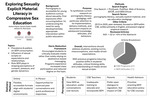
Background: Pornography has become increasingly accessible in recent years, particularly for younger audiences. Many individuals now report first exposure before the age of fourteen, underscoring the need for early, developmentally appropriate interventions within public education. To address students’ existing norms, misconceptions, and media‑driven expectations, especially those related to sexually explicit material (SEM), educators and researchers have emphasized the importance of pornography literacy as a critical component of modern comprehensive sex education (CSE). Purpose: This review synthesizes current research on pornography literacy pedagogy, with particular attention to its implementation, delivery methods, and documented impacts on adolescent knowledge, attitudes, and behaviors. Methods: Searches were conducted using the keywords pornography literacy, sexually explicit material, sex education pedagogy, and combinations of these terms. The University of Arkansas’s OneSearch served as the primary search engine, drawing from major academic databases including ProQuest, PubMed, Web of Science, JSTOR, and EBSCOhost. To be eligible for inclusion, articles had to be published between 2015 and 2025, peer‑reviewed, focused on SEM within CSE contexts, written primarily in English, and present original empirical research rather than review articles. A total of 643 articles met the initial keyword criteria, with 32 ultimately included in the final review after applying the full set of inclusion requirements to abstracts. Results: Across these studies, authors consistently highlighted the importance of SEM literacy, even when explicit materials were not incorporated directly into instruction. Attempts to integrate SEM literacy into curricula produced mixed results, but most interventions demonstrated positive shifts in students’ attitudes, critical thinking skills, and understanding of media‑driven sexual scripts. Instructional approaches varied widely; programs were delivered both in person and online, reflecting the need for flexible, accessible formats that align with students’ digital environments. Common topics included the prevalence and patterns of pornography consumption, the influence of sexual scripts on expectations and relationships, and the role of SEM in shaping perceptions of consent, pleasure, and gender dynamics. Several studies also highlighted the value of harm‑reduction frameworks, which encourage students to critically evaluate media rather than rely solely on abstinence‑based messaging. Discussion: Overall, the literature suggests that CSE programs that omit discussions of SEM risk underserving students. Young people actively seek information about sexuality and relationships, and in the absence of structured guidance, they often rely on peers or online sources that may reinforce misinformation. Integrating pornography literacy into CSE is therefore essential for equipping students with the critical skills needed to navigate SEM safely, responsibly, and with greater media awareness.
Publication Date
2026
Document Type
Book
Degree Name
Bachelor of Science in Public Health
Degree Level
Undergraduate
Department
Health, Human Performance and Recreation
Advisor/Mentor
Davis, Robert
Committee Member
Casey, Kim
Disciplines
Public Health Education and Promotion
Keywords
Expanded Literature Review
Citation
Payne, A. (2026). Exploring Sexually Explicit Material Literacy in Compressive Sex Education. 2026 Honors Symposium. Retrieved from https://scholarworks.uark.edu/coesym26/4

