


Files
Download Full Text (1.7 MB)
Date of Graduation
5-2026
Description
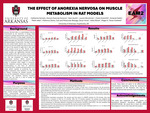
Anorexia Nervosa is an extremely deadly psychological disorder characterized by excessive weight and muscle loss. Muscle mass is critical for health and longevity; therefore, excessive muscle atrophy can significantly diminish health and quality of life. One key moderator of muscle health is mitochondrial function. The purpose of this study is to evaluate changes in mitochondrial functions in early weight loss during the development and progression of simulated AN. Major muscle atrophy might cause deviations in overall mitochondrial respiration; therefore; investigating changes in mitochondrial function will assist in the treatment of recovering patients. This study was conducted on eight-week-old, female Sprague Dawley rats. There were 3different durations of simulated AN: a 3-day protocol, a 5-day protocol, and a 15-day protocol. For all protocols, there was an anorexia group (AN), which underwent simulated AN, and a control group (CON). The AN cohort was given 50-60% less food than the normal amount for the duration of the protocol. After the timepoints were complete, tissue harvest occurred. A sample from the right gastrocnemius muscle was teased and prepared for the Oroboros procedure. The Oroboros measures the oxygen consumption of muscle tissue with various substrates to stimulate different complexes of the electron transport chain. The two variables that were measured from this procedure were specific flux (SF) and flux control ratio (FCR). SF refers to the rate of oxygen consumption within the mitochondria, while FCR measures the metabolic efficiency of the different complexes of the electron transport chain. Statistical analysis was performed by t-test between AN and CON at each individual timepoint (3, 5, or 15 days) with significance denoted at P < 0.05. Overall, there is more variability seen between AN animals and CON animals in the 5-day timepoint than the 3-day or 15-day timepoints. The variability seen in the 5-day animals was in the SF deviations for leak, glutamate transfers in ETC complex I, and succinate transfers in ETC complex I. For the 5-day FCR, 3-day SF and FCR, and 15-day FCR and SF, there was no significant difference between the AN and CON groups. This finding was partially consistent with the hypothesis. There were some differences between the AN and CON; however, the differences were expected to be between mean values of the groups and not in the variability. Additionally, differences seen in the 5-day groups, coupled with the lack of differences seen in the 3-day groups, suggest that during longer durations of simulated AN, there is more variability in mitochondrial respiration. However, preliminary data in 15-Day animals suggests that there are no differences between AN and CON groups. Additional testing must be conducted to further understand the reliability and validity of these results.
Publication Date
2026
Document Type
Book
Degree Name
Bachelor of Science in Exercise Science
Degree Level
Undergraduate
Department
Health, Human Performance and Recreation
Advisor/Mentor
Rosa-Caldwell, Megan
Committee Member
Murach, Kevin
Disciplines
Biochemical Phenomena, Metabolism, and Nutrition | Nutritional and Metabolic Diseases | Sports Sciences
Keywords
Research-Based
Citation
Schultz, C., Rosa-Caldwell, M., Jafari, M., Wood, K., Greenhill, C., Austin, S., Brockman, L., Okoto, P., Vicen, O., & Habib, A. (2026). The Effect of Anorexia Nervosa on Muscle Metabolism in Rat Models.. 2026 Honors Symposium. Retrieved from https://scholarworks.uark.edu/coesym26/7
Included in
Biochemical Phenomena, Metabolism, and Nutrition Commons, Nutritional and Metabolic Diseases Commons, Sports Sciences Commons

