


Files
Download Full Text (368 KB)
Date of Graduation
5-2026
Description
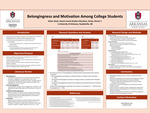
Background/Introduction: Student motivation is influenced by a plethora of variables and factors in educational settings which include the student’s sense of belongingness; however, belonging is often treated as a single construct rather than a dimensional idea. This study addresses the need to differentiate student belongingness into its distinct components of peer belonging and institutional belongingness and examine their unique contributions to levels of student motivation in the collegiate level. Purpose: The purpose of this study is to examine this distinction between levels of institutional belongingness and peer belongingness as well as their independent and collective influences on motivation among college students. This study seeks to determine whether these forms of belonging contribute differently to motivation and to what degree of contribution, if any. Before completing research, we hypothesized there would be a stronger positive correlation between peer belongingness and higher academic motivation although both would see some form of positive correlation. Methodology: This study employed a cross-sectional design in the form of a survey. We collected data from a convenience sample of college students currently enrolled in a university. After filtering out unfinished and incomplete responses, we were left with 45 valid responses to analyze and determine results. However, it is noted that the relatively small sample size is a significant limitation in this research. Survey items were adapted from established instruments. For measures of peer belongingness, questions from the School Belongingness Scale, Psychological Sense of School Membership Scale, and College support scale were used. Measures of institutional belongingness pulled from the University Belonging Questionnaire, School Belongingness Scale, and questions created for this research project. Measures of Motivation all came from the University Student Engagement Inventory. A five-point Likert-scale was used to measure participants’ extent of agreement with answers ranging from “Strongly Disagree” to “Strongly Agree”. Data was analyzed using correlation analyses to determine relationships among variables. Results: Findings indicate that institutional belonging demonstrates a stronger positive correlation (r = 0.685) with high academic motivation than peer belonging alone (r = 0.502). However, the combined influence of institutional and peer belonging produce the strongest correlation with academic motivation (r = 0.692). Discussion/Conclusion:These findings suggest that belongingness is greater than a single dimensional construct. Institutional and peer belongingness both have distinct but positive correlations with motivation levels. Considering the limitations, further investigation about motivation and belongingness is needed, particularly the interplay between peer and institutional belongingness. This study reinforces prior research on belongness and motivation while identifying potential areas to prioritize strategies that foster positive belongingness, both peer and institutional, which are strongly associated with student motivation at a collegiate level.
Publication Date
2026
Document Type
Book
Degree Name
Bachelor of Arts in Teaching
Degree Level
Undergraduate
Department
Curriculum and Instruction
Advisor/Mentor
Airola, Denise
Disciplines
Higher Education | School Psychology
Keywords
Research-Based
Citation
Seiter, N. (2026). Belongingness and Motivation Among College Students. 2026 Honors Symposium. Retrieved from https://scholarworks.uark.edu/coesym26/11

