


Files
Download Full Text (622 KB)
Date of Graduation
5-2026
Description
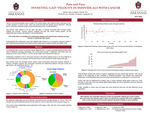
Background: Cancer remains the second leading cause of death worldwide, with incidence rates continuing to rise. Pain, a hallmark symptom of many cancers, is caused by both the progression of disease and treatments. Gait, the way in which someone walks, is now dubbed the “6th vital sign” for its strong relationship with functional status, longevity, and survival. Specifically, gait velocity is a key metric for gait, with previous studies in cancer free adults showing increased pain associated with a decreased gait velocity. The relationship between gait velocity and pain has not yet been explored in individuals with cancer. Purpose: The purpose of my study was to examine the relationship between self-reported pain and gait velocity in individuals with cancer. It was hypothesized that higher pain levels would be associated with decreased gait velocity. Methods: This study utilized 70 participants (mean age = 68 years) who had a current or previous diagnosis of cancer. The sample included 17 different cancer types, with the three most common being breast cancer, lung cancer, and lymphoma. Participants completed a Visual Analog Scale (VAS) to rate their pain and then performed four walking passes at their normal, comfortable walking pace on a 16-foot pressure-sensing walkway. The acceleration and deceleration phases were excluded to isolate steady-state gait velocity and average gait velocity was calculated in meters per second (m/s). The primary dependent variable was gait velocity, and the independent variable was VAS pain score. A Pearson Correlation analysis was conducted to assess the relationship between pain and gait velocity. Results: The correlation revealed no significant linear relationship between the VAS self-reported pain scores and gait velocity (r = .04, p = .75). Participants demonstrated a wide distribution of both pain scores (range: 0 - 80) and gait velocities (range: 34.17 - 145.4 m/s) across varying cancer types and stages, with no discernable trend. Discussion: Contrary to my initial hypothesis, individuals with cancer showed no relationship between perceived pain and gait velocity. These results may suggest that gait velocity is influenced by additional factors beyond subjective pain, such as cancer type, treatment status, and pain location specifics. Likewise, the wide variability in VAS scores may include potential social desirability bias. This data suggests gait velocity does not exhibit a linear relationship with pain in a heterogeneous sample of cancer patients, emphasizing the necessity for further research with stricter parameters.
Funding Source: Honors College Research Grant
Publication Date
2026
Document Type
Book
Degree Name
Bachelor of Science in Exercise Science
Degree Level
Undergraduate
Department
Health, Human Performance and Recreation
Advisor/Mentor
Schmitt, Abigail
Committee Member
Greene, Nicholas
Disciplines
Biomechanics | Exercise Science | Other Kinesiology | Pathological Conditions, Signs and Symptoms
Keywords
Researched-Based
Citation
Taylor, M. E. (2026). Pain and Pace: Investigating Gait Velocity in Individuals with Cancer. 2026 Honors Symposium. Retrieved from https://scholarworks.uark.edu/coesym26/5
Included in
Biomechanics Commons, Exercise Science Commons, Other Kinesiology Commons, Pathological Conditions, Signs and Symptoms Commons

