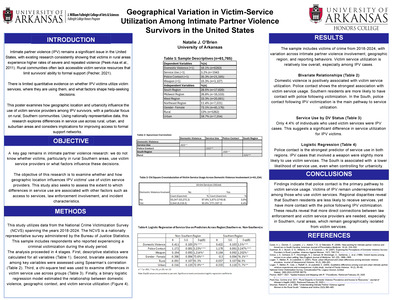
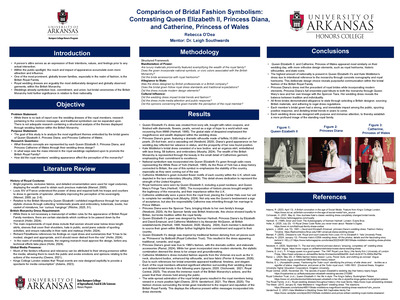
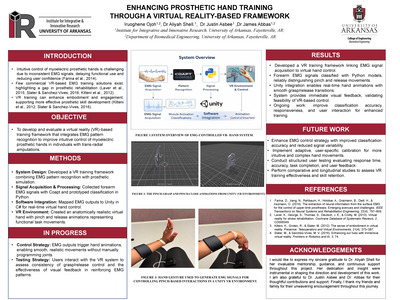
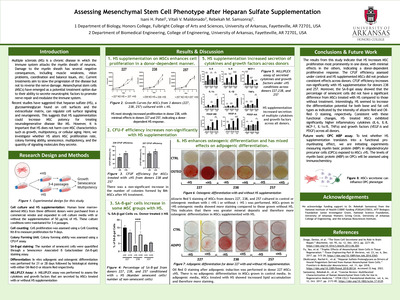
-
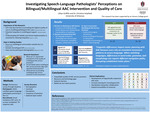
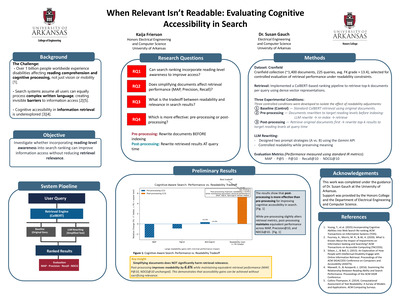
Investigating speech-language pathologists’ perception on bilingual/multilingual AAC intervention and quality of care.
Lillian Griffith
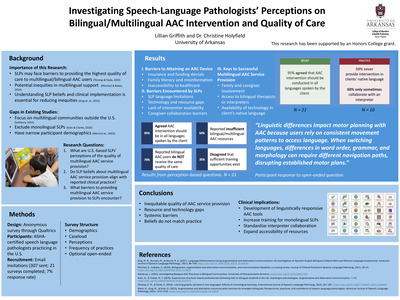
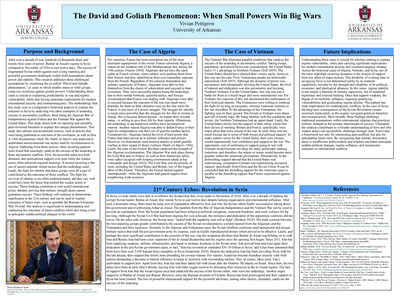
In recent decades, the caseloads worldwide of speech-language pathologists (SLPs) have become increasingly linguistically diverse (Soto & Yu 2014). However, current research in the field of communication sciences and disorders is primarily focused on monolingual populations, with a similar lack of research in the field regarding bilingual/multilingual Augmentative and Alternative Communication (AAC) (Tönsing & Dada 2022). AAC refers to methods of communication other than spoken language and can augment existing speech or serve as an alternative to speech (ASHA n.d.). Although advancements in the field regarding AAC use for monolingual/English-speaking clients have been made, there is a lack of research and specific training on addressing AAC use for multilingual/bilingual individuals (Ward et al. 2023). As a result, SLPs may face uncertainties regarding the ability to provide the highest quality of care to multilingual/bilingual AAC users (Tönsing & Dada, 2022). There is research into the topic of current practices by speech-language pathologists for bilingual AAC users, but there are known limitations to these studies (Ward et al. 2023; Salisbury 2022). This research will answer these questions by being conducted in the U.S., exploring both monolingual SLP and bilingual SLP perceptions on bilingual/multilingual AAC, identifying barriers to providing intervention and assessment to bilingual/multilingual AAC users, addressing actual implementation of recommended practices, and exploring the commonality of family/caregiver, interpreter collaboration.
-
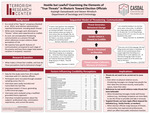
Hostile but Lawful? Examining the Elements of “True Threats” in Rhetoric Toward Election Officials
Kayleigh Gwiazdowski
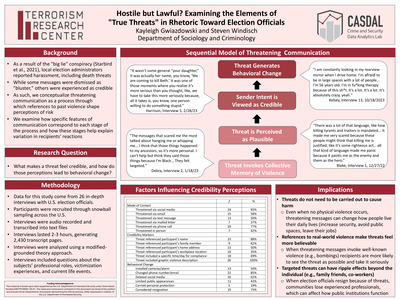
Threats of violence have become increasingly visible, yet they remain understudied compared to acts of violence themselves. This project examines death threats directed at U.S. election administrators following the 2020 Presidential Election. Drawing on qualitative interviews with 26 current and former U.S. election administrators, I analyzed 580 hostile messages received in the aftermath of the election to understand how threats function as a tool of intimidation and coercion. Messages were examined for markers indicating (1) whether the sender expressed the intent to threaten, (2) whether the language specified a concrete act of violence or identifiable target, and (3) whether a reasonable person in the recipient’s position would experience fear of imminent harm. Rather than treating threats as a binary category, I analyze how extremist rhetoric frequently approaches, but does not cross, the legal threshold of a prosecutable threat. This approach allowed me to assess how threatening communications operated along a spectrum rather than as a discrete event.Findings reveal that most messages lacked one or more elements required to constitute a “true threat.” While only a small proportion of messages (~5%) met all three criteria of intent, specificity, and reasonable fear, the majority contained violent language that stopped short of explicit threat-making. Nearly 57% of messages fell into a category of “cyberbullying,” while an additional 38% constituted “violent talk.” These messages frequently conveyed anger, moral judgment, or implied harm while avoiding details that would elevate them to a legally actionable threat. The results suggest that senders engaged in boundary-pushing behavior by using ambiguity to intimidate election officials. Overall, this study highlights the gap between legal definitions and lived experiences of intimidation. Even when communications did not qualify as true threats, participants reported fear, stress, and professional disruption, which can undermine institutional stability and democratic participation. By empirically demonstrating that most hostile messages avoid breaching the legal threshold, the results provide an evidence base for policy reforms that address patterned intimidation, rather than isolated statements. Policymakers could use these findings to enhance workplace protections or harassment statutes that account for repeated boundary-pushing behavior even when individual messages do not qualify as true threats.
-
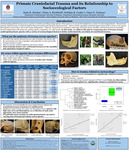
Primate craniofacial trauma and its relationship to socioecological factors.
Katie Harden
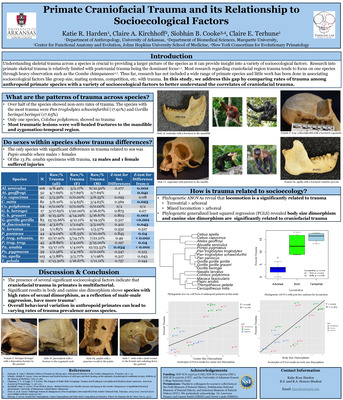
Understanding patterns of skeletal trauma in primates can provide key insights into how a species lived and may reflect aspects of their socioecology and life history. Though some research has examined postcranial trauma in primates, analyses of craniofacial trauma are rare. Here we analyze craniofacial trauma in anthropoid primates with the goal of documenting rates of trauma and their relationships to socioecological factors. Trauma was documented in a total of 1093 specimens from 17 species of primates. For each species, patterns and prevalence of trauma were assessed and z-tests performed to assess sex differences and whether rates differed significantly from zero. Rates across species were then compared to a variety of socioecological factors (e.g., group size, dimorphism, diet, infanticide, etc.) using regression and ANOVA models. Prevalences of trauma in this sample ranged from 0% (Colobus polykomos) to 18% (Pan troglodytes schweinfurthii). Eleven showed non-zero rates of trauma, and only Papio anubis exhibited sex differences. Most lesions were classified as fractures and tended to be located on the mandible or zygomatico-temporal region. Almost all lesions were determined to be moderately or well healed. However, ANOVA and regression models found few significant relationships between trauma and other factors. It was determined that only sexual dimorphism, locomotion and life span have significant impacts on craniofacial trauma in primates. This is the first study that documents rates of trauma in primates broadly across multiple species, and it demonstrates that rates of trauma in primates are highly variable. However, the lack of clear sociological relationships to trauma suggests that these patterns are multifactorial.
-
Investigating the potential role of horse flies (Diptera: Tabanidae) in the mechanical transmission of Anaplasma marginale and Theileria orientalis to cattle in Northwest Arkansas
Catherine Harrison
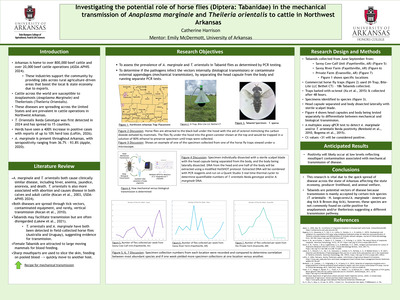
The cattle industry in Arkansas plays a significant role in the state’s agricultural economy; however, two emerging infectious diseases pose a threat to cattle health, producer livelihood, and animal welfare. The two diseases, anaplasmosis and theileriosis, are caused by organisms that enter the host’s bloodstream and infect red blood cells, leading to destruction of said cells. The shared symptoms of both diseases are fever, weakness, anemia (low red blood cell count), reduced productivity, weight loss, and possibly death. An important difference between symptoms is that, unlike anaplasmosis, theileriosis can cause abortion in cattle. Both diseases are known to spread through ticks and contaminated equipment, but the potential of biting flies (specifically horseflies) spreading disease remains poorly understood. This knowledge gap limits the effectiveness of current disease prevention and management strategies. The goal of this research is to evaluate if horseflies collected from environments with cattle nearby in Northwest Arkansas carry the organisms responsible for anaplasmosis (Anaplasma marginale) and theileriosis (Theileria orientalis), and to assess whether these flies may contribute to disease transmission. From June 2025 to September 2025, horseflies were collected weekly with industrial fly traps at three environmentally distinct cattle locations: a university-managed cow-calf unit, a pasture next to a river, and a privately owned cattle operation. These areas were selected based on ecological differences, with knowledge of horsefly environmental preferences in mind, and confirmed/suspected disease presence in cattle. The collected flies, 186 in total, were identified by species and will be analyzed using DNA-based laboratory testing to detect the presence of the disease-causing organisms. To understand how transmission may occur, each fly will be separated into head and body sections before DNA tests are run. This approach will help determine whether pathogens are only present on the fly’s mouthparts, indicating mechanical spread of disease, or within the body, suggesting a deeper biological association with disease transmission. This research will provide new views into whether biting flies play a role in the spread of anaplasmosis and theileriosis among cattle. The findings could help producers and veterinarians in making more informed decisions about fly control and disease prevention. Additionally, this research contributes to a better understanding of how these potential disease-transmitting organisms interact with their physical environment in livestock systems, highlighting the importance of investigating overlooked transmission pathways. By addressing a real-world agricultural problem, this project supports improved animal welfare, stronger biosecurity practices, and long-term stability of Arkansas’s cattle industry.
-
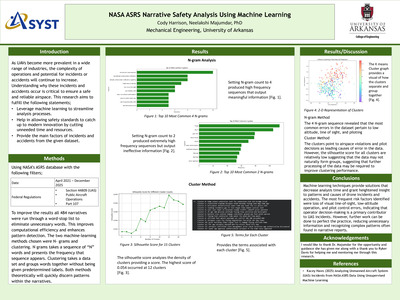
Unmanned Aircraft Vehicle Safety Reporting and Analysis of Incidents Utilizing Machine Learning
Cody Harrison
Unmanned Aerial Vehicles (UAVs) are rapidly evolving and being integrated into a wide range of applications, from commercial deliveries to police surveillance and recreational use. As UAVs become more prevalent, the complexity of operations and potential for incidents or accidents will continue to increase. Understanding why these incidents and accidents occur is critical to ensure safe and reliable drone operations as the industry continues to grow. To combat these issues, it is invaluable to analyze UAV incidents quantifiably to identify leading causes and risks in a streamlined and efficient matter. Current manual reporting systems often struggle with the sheer volume of data generating from the growing drone sector. Analyzing each individual report is time consuming calling for strict technical expertise to identify causes without allowing subjectivity to sway conclusions. My research aims to leverage machine learning using Google Colab to analyze drone incidents and accidents by providing narratives from NASA’s Aviation Safety Reporting System (ASRS). This database provides a vast library of voluntary reports allowing for raw and more detailed reports than a typical database by reliving the operator or witness from any legal penalty. Machine learning can highlight patterns and sift through these intricate reports much faster than a human, reducing the analysis period dramatically. Narratives that have previously been analyzed will be used as a check to ensure that the machine learning algorithm is correctly categorizing and analyzing the given narratives providing an accurate output that can be used for future prevention. The big advantage to machine learning is that once the algorithm has been taught it can be used for multiple drone sections or parts given the necessary information is provided. By combining human factors analysis with machine learning, this research aims to bridge gaps in understanding UAV operational risks and demonstrate how machine learning can improve UAV analysis efficiency and assist in preventing future incidents.
-
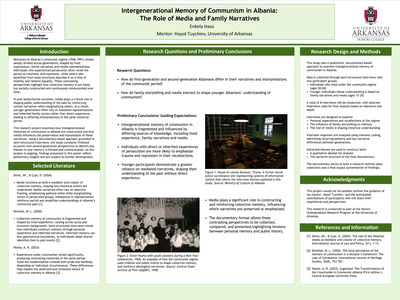
Intergenerational Memories of Communism in Albania and the Role of Media
Enkela Hasa
Memories of Albania’s communist regime (1946–1991) remain deeply divided across generations, shaped by lived experience, family narratives and mediated representations. While individuals who endured exile or punishment often recall the period as traumatic and repressive, others who experienced social stability or benefited from state structures describe it as a time of economic security and relative equality. These competing interpretations raise important questions about how collective memory is formed, transmitted and contested over time. This thesis examines how intergenerational memories of communism in Albania are constructed and how media influences the preservation, reinterpretation or silencing of these narratives. Through the production of a documentary grounded in oral history methodology, the project collects testimonies from two groups: individuals who lived under the communist regime and younger Albanians whose understanding of the era derives primarily from education, family discourse, and contemporary media. These narratives are analyzed alongside archival propaganda materials and post-communist media coverage to evaluate how memory is shaped, challenged and institutionalized. By comparing firsthand accounts with mediated representations, this study explores the tensions between personal memory and public history. It analyzes how media platforms shape generational understandings of “truth” and legitimacy. The project places Albania within the broader field of post-authoritarian memory, emphasizing the role of storytelling in forming national identity. Ultimately, this research demonstrates that memory is continuously reconstructed through intergenerational conversations and media representations. Understanding these processes helps explain how societies transitioning from authoritarian rule confront conflicting interpretations of their past and how media preserves and shapes historical narratives.
-
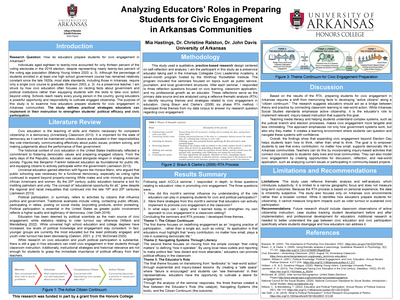
Analyzing Educators’ Roles in Preparing Students for Civic Engagement in Arkansas Communities
Mia Hastings
Individuals aged eighteen to twenty-nine accounted for only thirteen percent of the voting electorate in the 2018 election, despite representing nearly twenty-two percent of the voting age population (Making Young Voters, 2020, p. 3). Although the percentage of students enrolled in at least one high school government course has remained relatively constant since the late 1920s, most state standards, including those in Arkansas, require only a single civics course to graduate (Branson, 2003, p. 3). As a preservice teacher, I am struck by how civic education often focuses on reciting facts about government and political institutions rather than equipping students with the skills to take civic action beyond voting. Schools reach nearly every young person in the country, giving educators a powerful opportunity and responsibility to cultivate engaged citizenship. In Arkansas, the Department of Education’s Social Studies Standards emphasize civic virtues in society. Yet, a gap remains in how civic knowledge and participation is translated within classrooms.With my research I seek to answer the question: “How do educators prepare students for civic engagement in Arkansas?” Through this study, I intend to identify practical strategies educators can implement to strengthen students’ political efficacy and civic participation. To address the research question, I will participate in a practice-based experience with the Arkansas Collegiate Civic Leadership Academy, a seven-month program hosted by the Winthrop Rockefeller Institute. Through five seminars on topics such as public service, journalism, and local government, I will analyze how these experiences inform educators’ roles in promoting civic engagement. After each seminar, I will respond to three reflection questions designed to assess the connection between civic learning, classroom application, and personal development as a future educator. The reflections will be analyzed using a reflexive thematic analysis to identify recurring themes and practical strategies for classroom implementation. The findings will be compared to Arkansas’s current Civic standards to assess how educators can better foster a generation of informed, active citizens in a democratic society. Additionally, the results will provide teachers, administrators, and curriculum develops with intentional strategies to promote civic participation and strengthen democratic engagement among students in Arkansas and beyond.
-
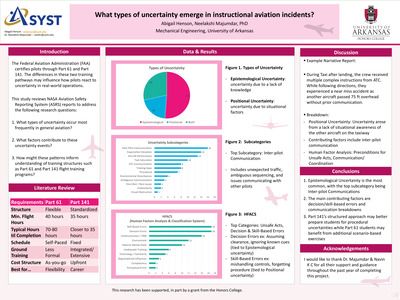
How Do Different Flight Training Programs Impact Pilot Proficiency?
Abigail Henson
The Federal Aviation Administration (FAA), founded in 1958, ensures safe and efficient use of national airspace by regulating aircraft and pilot certification, setting standards for airports, and managing the National Airspace System. One such regulation is in the certification process for aspiring student pilots. Students who want to obtain their private pilots license can do so by picking either a Part 61 or Part 141 flight school. While both lead to the same certification, these two options differ significantly in terms of structure; Part 61 programs offer flexibility with their individualized approach and fewer requirements while Part 141 schools follow a highly structured FAA approved syllabus and maintain strict pass-rate requirements. Despite having significant differences, very little systematic research exists comparing the rigor and efficiency of these two training models. In this project, I will evaluate whether Part 141 flight training is demonstrably more rigorous and efficient than Part 61 training by analyzing both quantitative and qualitative data. These results will directly inform prospective students, training institutions, and potentially aviation policymakers. More broadly, I will contribute to the ongoing conversation about pilot training standards in an industry facing increasing demand for qualified professionals. The findings will also support the completion of my undergraduate research and provide opportunities to present at undergraduate research conferences. The proposed research will also contribute to Dr. Majumdar’s ASYST lab’s primary research directive of making aerospace and transportation systems safer.
-
Validity and Reliability of the WUT Hydration System When Assessed in the Afternoon
Peyton Hines
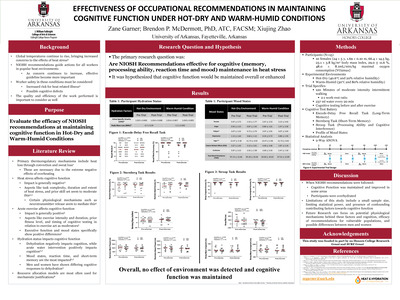
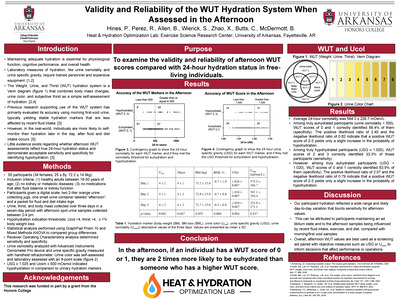
The WUT (weight, urine color, and thirst) Venn diagram is recommended for individuals to self-assess their hydration status. However, current research is limited to comparisons between morning first-void markers and 24-hour markers. PURPOSE: To examine the validity and reliability of afternoon WUT scores in comparison to 24-hour hydration status. METHODS: Fifty participants (25 ± 8y, 72.2 ± 14.9kg) voluntarily participated in this study. Participants collected afternoon spot urine between 2:00 and 4:00 pm and 24-hour urine samples on three out of seven consecutive days. Body mass (BM), urine color (Ucol), urine osmolality (Uosm), urine specific gravity (USG), and thirst perception were measured and recorded for afternoon samples in free-living conditions. Ucol, Uosm, and USG were measured and recorded for 24-hour samples. Spot values for hypohydration were as follows: afternoon USG ≥1.020, body mass loss (BML) > 1%, Ucol > 4, and thirst level > 4. The total number of hypohydration indicators was classified as 0, 1, 2, or 3 to form the WUT score. The sensitivity and specificity of 0, 1, 2, or 3 WUT scores were characterized using Receiver Operating Characteristics (ROC) analysis to calculate the predictive value of WUT in hypohydrated and euhydrated states. A positive likelihood ratio (LR+) provided additional context, indicating predictive capacity of WUT markers, indicating 24-hour Uosm > 500mOsm/L. RESULTS: Among truly hypohydrated participants (urine osmolality greater than 500), WUT scores of 2 and 3 correctly identified 30% of those participants (sensitivity). However, among truly euhydrated participants (urine osmolality < 500), WUT scores of 0 and 1 correctly identified 84% of them (specificity). The positive likelihood ratio of 1.9 and the negative likelihood ratio of 0.83 indicate that a positive WUT score of 2-3 produces only a slight increase in the probability of hypohydration, falling just short of the clinically significant likelihood ratio. Body mass loss decreased across days (day 1: -0.8± 1.0%, day 2: -0.7± 0.8%, day 3: -0.3 ± 0.8%, p-value: 0.0036), indicating an improvement in fluid balance. Thirst (day 1: 4±1, day 2: 4±2, day 3: 4±2, p-value: 0.6671) and urine color (day 1: 4±1, day 2: 3±1, day 3: 4±2, p-value: 0.0817) were not significantly different across days. The average 24-hour urine osmolality was 564.3 ± 226.7 mOsm/L. CONCLUSION: Our participant hydration reflected a wide range and likely day-to-day variation that blunts sensitivity for afternoon values. This can be attributed to participants maintaining an ad libitum state and to the afternoon samples being influenced by recent fluid intake, exercise, and diet, compared with morning/first void samples. Overall, afternoon WUT values are best used as a screening aid paired with objective measures such as USG or Uosm to inform decisions that affect performance or operations. PRACTICAL APPLICATION: In field settings such as athletics, the military, and occupational settings, the WUT Venn diagram should be used as a screening aid alongside additional scientific measures to reflect overall hydration status accurately.
-
Satisfaction with Physician Communication
Joyce Ho
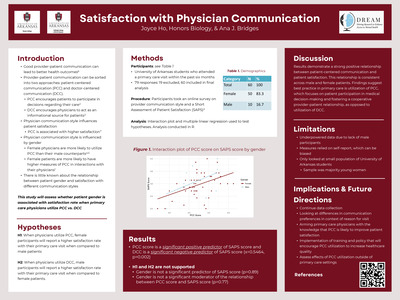
Problem. Provider-patient communication can be sorted into two approaches: patient-centered communication (PCC) and doctor-centered communication (DCC). PCC is characterized by a patient focus, in which patients are encouraged to participate in decisions regarding their care, while DCC is characterized by a doctor focus, in which the physician acts as an informational source for patients (Bientzle et al. 2017). Physician communication style is known to be influenced by gender. Female physicians are more likely to utilize PCC than their male counterparts (Roter 2004). Female patients are more likely to have higher measures of PCC in interactions with their physicians (Bertakis et al. 2009). However, there is little known about the relationship between patient gender and satisfaction with different communication styles. This study will assess whether patient gender is associated with satisfaction rate when primary care physicians utilize PCC vs. DCC. Method. Participants will be 50 undergraduate students (aged 18 or older) at the University of Arkansas who attended a primary care visit within the past six months. They will complete an online survey that includes a provider communication style measure and the Short Assessment of Patient Satisfaction (Hawthorne et al. 2006). Data will be analyzed using multiple linear regression. Results. Data collection is underway and it is hypothesized that: (H1) when physicians utilize PCC, female participants will report a higher satisfaction rate with their primary care visit when compared to male patients; (H2) when physicians utilize DCC, male participants will report a higher satisfaction rate with their primary care visit when compared to female patients. Conclusions. This work has implications for provider communication styles and other clinical practices that may support patient satisfaction and treatment engagement in primary care.
-
Exploring experiences of contraceptive counseling & coercion among various races and age groups of women of reproductive age.
Haylie Horn
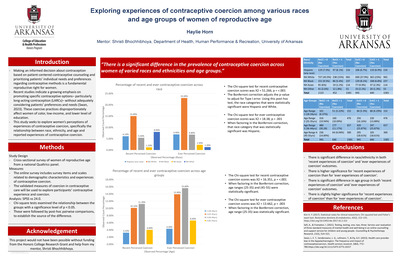
Making an informed decision about contraception based on patient-centered contraceptive counseling is a fundamental reproductive right for women. This counseling approach serves as a key indicator of high-quality health care that focuses on and prioritizes patients’ individual needs and preferences regarding contraceptive methods. However, recent studies indicate a growing emphasis on promoting specific contraceptive options – particularly long-acting contraception (LARCs) – without adequately considering patients’ preferences and needs, which has led to growing concerns over contraceptive coercion. Despite concerns, no studies have yet explored the association between certain demographic factors like race, education level, age, socioeconomic status, etc. This study seeks to address that gap by exploring women’s perceptions of experiences of contraceptive counseling and contraceptive coercion, both ever and recent, among diverse demographic groups. Specifically, it will assess the relationship between race, ethnicity, and age and reported experiences of contraceptive counseling and coercion. I will use a cross-sectional survey of 2,200 women of reproductive age (18-49) from a national Qualtrics panel. This study will measure patient-centered contraceptive care, contraceptive coercion, and demographic characteristics. Descriptive statistics will be conducted in SPSS v. 24 to explore contraceptive counseling and coercion. Additionally, correlational analyses will assess the relationship between contraceptive counseling experiences and coercion. By addressing a critical gap in the literature, the study will provide valuable insights into how women from various races and age groups perceive contraceptive counseling care and coercion. The findings will contribute to a better understanding of contraceptive counseling practices and highlight whether coercion manifests among women with specific demographic characteristics, ultimately informing more knowledge about patient-centered reproductive healthcare.
-
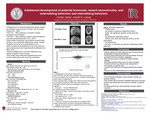
Adolescent development of pubertal hormones, reward neurocircuitry, and externalizing behaviors and internalizing behaviors
Amber Jared
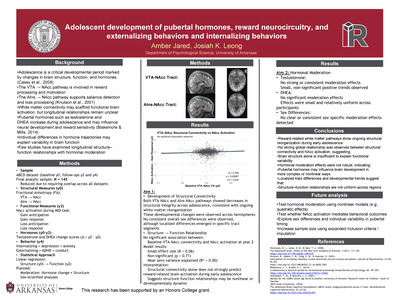
Title: Adolescent development of pubertal hormones, reward neurocircuitry, and externalizing behaviors and internalizing behaviors Authors: Amber Jared & Josiah K. Leong Background: Adolescence is a period of rapid biological and brain development during which changes in pubertal hormones and neural reward systems may increase vulnerability to emotional and behavioral difficulties. Although prior research has documented widespread brain maturation during adolescence, less is known about how specific subcortical reward pathways develop and how these changes relate to hormones and behavior. Methods: Using longitudinal data from the Adolescent Brain Cognitive Development (ABCD) study, this project examines developmental changes in two key brain pathways involved in reward and motivation: connections from the ventral tegmental area and anterior insula to the nucleus accumbens. Structural brain imaging data were analyzed at ages 9-10 as the baseline timepoint in a large national sample. Two year follow-up timepoints were used to analyze functional data of the regions of interest. Four year follow-up timepoints were used to test predictive values for internalizing and externalizing behavior. Internalizing behaviors include depression and anxiety, and externalizing behaviors include aggressive and disruptive behaviors. White matter integrity of these pathways was quantified using diffusion MRI, and longitudinal changes were assessed while accounting for biological sex and puberty onset. Results: Preliminary results from Aim 1 indicate that both reward-related pathways show decreases in structural integrity across adolescence, consistent with ongoing brain reorganization during this developmental window. These changes were observed across hemispheres and did not significantly differ between males and females in early puberty, other than in two sections. Building on these findings, Aim 2 investigates how pubertal hormones, including testosterone and dehydroepiandrosterone (DHEA), are associated with individual differences in reward pathway development and how these hormonal differences moderate the structure-function connection. These data analyses are currently in progress. Aim 3 will then extend this work by analyzing how function can mediate the relationship between brain tract structure and internalizing and externalizing behaviors, while also examining gender differences. Conclusions: Together, this research aims to clarify how hormonal, structural, and functional changes jointly shape the developing adolescent brain. Understanding normative development of reward circuitry may help inform future research on mental health risk, substance use vulnerability, and behavioral regulation, and may support earlier identification of adolescents at heightened risk for maladaptive outcomes.
-
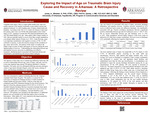
Exploring the Impact of Age on Traumatic Brain Injury Cause and Recovery in Arkansas: A Retrospective Review
Abby Jones
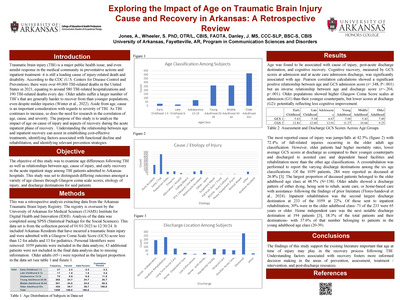
Traumatic brain injury remains a major public health concern, and increasing evidence demonstrates the significance of the effect of age in quality of care, diagnosis, and recovery outcomes. In rural states, such as Arkansas, where research has shown a lack of resources and higher fatality rates among persons with TBI, healthcare professionals can become better informed and equipped to optimize recovery and rehabilitation as a result of research efforts to explore the effects of age from the standpoint of cause and recovery (Daugherty et al., 2022). This study was a retrospective analysis involving data covering a two-year period extracted from the Arkansas Traumatic Brain Injury Registry, information collected from inpatient facilities across Arkansas in conjunction with University of Arkansas for Medical Sciences. The study explores various characteristics associated with age, including Glasgow Coma Scale score at admission and discharge, length of initial inpatient stay, gender, and cause of injury. A total of 1072 individuals admitted to hospital following brain injury between 1/1/2023 and 12/31/ 2024 were included in the analysis. The most common category of these hospital admissions was older adult, ages 65 years and older (n=425). Tentative findings suggest that age was positively correlated with injury severity at admission and inversely correlated with injury severity as discharge. Additionally, age was inversely correlated with length of initial hospital stay. Exploring these relationships can provide clinicians with information to better manage recovery and support prevention. This research is particularly relevant in Arkansas, where large rural populations underscore the significance of raising awareness of traumatic brain injury. The study also provides Arkansas healthcare providers with age related information about cause of injury and characteristics associated with recovery to administer careful and comprehensive care.
-
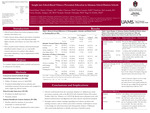
Insight into School-Based Tobacco Prevention Education in Arkansas School Districts
Faisal Khan
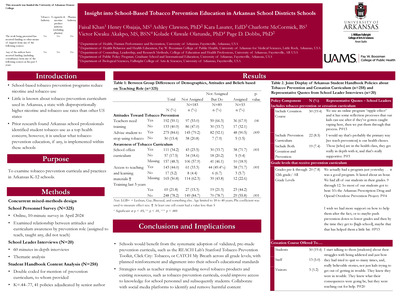
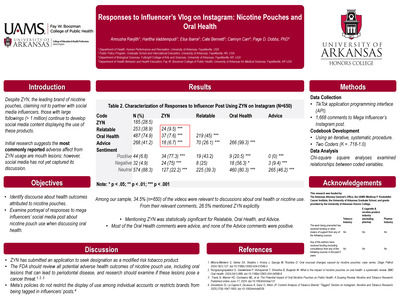
Insight into School-Based Tobacco Prevention Education in Arkansas School Districts [PD1] Henry Obajaja, Ashley Clawson, Kara Lasater, Victor Kwaku Akakpo, Kolade Olatunde, Luke Larsen, Faisal Khan, Page D Dobbs Characters: 2,500/2,500Select Category: Public Health Study Type: Cross-sectionalPresentation Type – Paper or Poster Funding – select University (College of Education and Health Professions WE CARE Initiative) Significance. Despite national declines in youth tobacco use, Arkansas, a Tobacco Nation state, continues to report disproportionately high rates of tobacco use among adolescents. Prior research found Arkansas school professionals identified student tobacco use as a top health concern; however, it is unclear what tobacco prevention education, if any, is implemented within these schools. This study examined Arkansas school personnel’s awareness of and involvement with evidence-based tobacco prevention education. Method. A convenience sample of school personnel (e.g., teachers, administrators, and staff) from K-12 schools in Arkansas (n=325) completed a cross-sectional survey that asked questions about the tobacco prevention curriculum used, need for teacher training to deliver tobacco prevention education, and perceptions of how well their school integrated tobacco prevention strategies. Participants were grouped by their role in implementing tobacco prevention education: (1) not part of their assignment, (2) not assigned to educate but did anyways, and (3) assigned to educate about tobacco prevention. Chi-square tests examined associations between personnel roles and prevention practices employed, and ANOVAs assessed differences in personnel roles and perceptions of policy integration (how well they believed the school integrated ….) Result. The study revealed that only 29% of respondents reported using a premade tobacco prevention curriculum, 28.7% used a non-premade curriculum, and 41.3% reported none. There were significant associations between personnel roles and awareness of prevention curriculum used in one’s school (p< .001), belief in the need for specific teacher training (p< .05), and receipt of prevention-related training in the past three years (p< .001). Overall, 49% of those who were assigned to teach reported using or not using a premade curriculum, while 24.7% of those who were not assigned but ended up teaching reported using a premade curriculum. Further, those assigned to teach prevention reported significantly higher perceptions of research-based curricula (p< .05), cessation services (p< .05), prevention in academics (p< .05), and school tobacco specialists (p< .05). Implication. Few Arkansas schools are implementing evidence-based tobacco education curricula. There is a need to implement evidence-based tobacco prevention curricula, provide comprehensive teacher training, and integrate prevention throughout academics to reduce youth tobacco use.
-
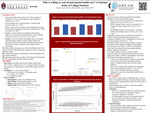
Predictors of Stigma and Their Relation to Mental Health Help-Seeking Attitude in College Students
Esiquil Lara
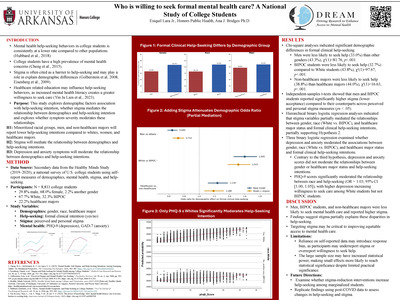
Stigma remains a significant barrier for college students seeking mental health services, yet its predictors and impact are still not fully understood. Mental health problems are a large issue in public health, specifically college age adults are one of the most likely groups to develop such issues. This study examines key factors contributing to stigma and its relationship with help-seeking attitudes among undergraduate college students. We hypothesize that students who identify with minority ethnic groups, identify as male, and who are not seeking a career in mental health services will have higher rates of stigma and therefore be less likely to seek mental health services. Secondary data was analyzed where participants (N=104,730) completed a self-report depression symptom screener, demographic surveys, acculturation assessment, and questionnaires on perceived benefits and barriers to seeking mental health services. Stigma was assessed using self-report measures of perceived and self stigma, while help seeking attitudes were measured through a student’s willingness and likelihood to utilize campus mental health services. Multiple regression analyses will be used to examine the extent to which demographic variables predict stigma levels and to evaluate the relationship between forms of stigma and help seeking attitudes. This data is expected to provide insights into the relationship of stigma predictors and help-seeking attitudes by helping to understand how factors such as ethnicity, major, gender, etc. affect stigma rates in college students. These findings will be beneficial to creating policies and practices for college campuses to ensure equity in use of resources for all students in need of mental health services.
-

Adaptive Leggings for Crohn’s/Colitis/ISBS Patients with a Colostomy/Ileostomy Bag
Evie Liebbe
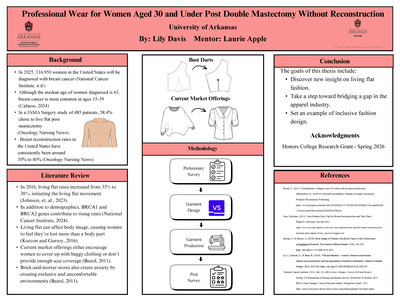
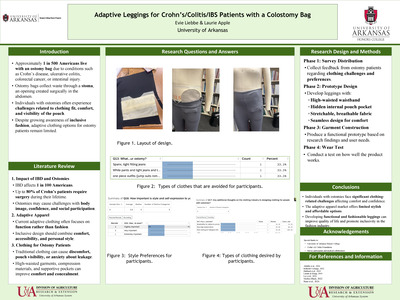
Individuals living with Crohn’s disease, ulcerative colitis, irritable bowel syndrome (IBS), and related gastrointestinal conditions often face significant physical and emotional challenges following colostomy or ileostomy surgery. While ostomy bags are essential medical devices that support health and survival, they frequently create difficulties related to clothing fit, comfort, discretion, and self-expression. Despite growing conversations around inclusivity and adaptive apparel, the contemporary fashion market offers limited stylish, affordable, and functional clothing options for individuals with ostomies, particularly younger consumers who value both comfort and personal style. This lack of inclusive design can negatively impact confidence, body image, and overall quality of life.The purpose of this study is to design and develop adaptive leggings and pants that are comfortable, stylish, and affordable for individuals living with colostomy and ileostomy bags. This project aims to address both the functional requirements of ostomy wearers, such as pouch support, concealment, and abdominal comfort, and the aesthetic desires often overlooked in adaptive clothing. By prioritizing soft, stretchable fabrics, discreet internal pouch-holding features, and inclusive design principles, the proposed garments seek to normalize ostomy wear within mainstream fashion while enhancing wearers’ confidence and sense of identity.This study is guided by three research objectives: (1) to identify the functional and aesthetic needs of colostomy and ileostomy patients, (2) to analyze existing adaptive apparel currently available in the market, and (3) to design and construct leggings and pants that effectively hold and conceal an ostomy pouch without compromising style or comfort. A survey-based research methodology will be used to collect data from adults with ostomy experience, allowing for user-centered design decisions grounded in real-world needs and preferences.By integrating medical functionality with contemporary apparel design, this project contributes to the growing field of inclusive fashion and highlights the importance of adaptive clothing that supports both physical well-being and emotional empowerment. Ultimately, the development of adaptive leggings for ostomy patients represents a meaningful step toward reducing stigma, increasing accessibility, and ensuring that fashion serves a broader and more diverse population.
-
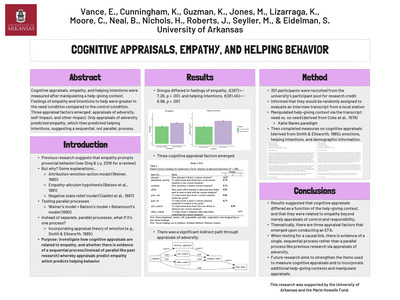
Cognitive Appraisals, Empathy, and Helping Behavior: Toward an Integrated Model
Kaitlyn Lizarraga
Research on cognitive appraisals, empathy, and prosocial behavior is prevalent in the literature, but these three domains have seldom intertwined in a meaningful way despite apparent conceptual overlap. Findings suggest that causal attributions of controllability (which are similar to cognitive appraisals of control and responsibility) predict sympathy and helping behavior, but no work has been done on how cognitive appraisals fit into the mix. Thus, the purpose of the present research was to investigate which cognitive appraisals predict empathy and whether empathy subsequently predicts helping intentions through a sequential process. Research on this topic is significant because there are always people in need, but the level of their needs may differ as well as the empathy levels of individuals when a situation arises. The present research was a between-subjects design on how appraisals, empathy, and helping differ between need vs. no need scenarios, which was inspired by work by Coke et al. (1978). We found that appraisals of attentional activity, situational control, uncertainty, other-responsibility, anticipated effort, goal congruence, goal relevance, and empathy and helping intentions were significantly higher in the need condition than the no-need condition, and that appraisals of pleasantness were lower. The results suggest that individuals evaluate a need-based scenario in ways beyond merely control and responsibility, and that it impacts how they feel and act. The results collected within these studies can contribute to future research by manipulating the demographics of the person in need. This would show if participants were still willing to help even if they are different from the one in need. If we manipulated the demographics of the person in need, this could be used to further study in-group bias and out-group bias.
-
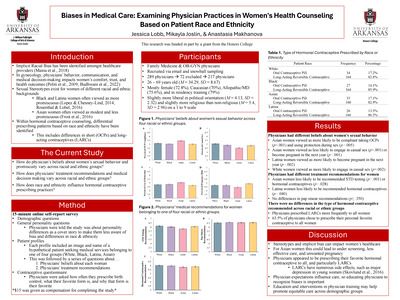
Biases in Prescribing Practices: Examining Physician Stereotyping in Women's Health Counseling Based on Patient Race and Perceptions of Promiscuity
Jessica Lobb
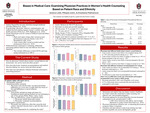
As modern healthcare moves towards a focus on personalized medicine, an evaluation of current provider practices is essential to evaluating quality of care. Numerous studies have shown that physicians exhibit stereotyping and implicit bias with patients, but much remains unknown about the extent this impacts women’s health counseling. The presence of stereotyping could affect women’s health outcomes, as decisions such as choosing to prescribe hormonal contraceptives have numerous physical and emotional side effects. This study aimed to assess how stereotyping contributes to physicians’ perceptions and medical decisions for women seeking gynecological care. Clinical vignettes were given to physicians showing women of four different racial categories, and physicians were asked to rate their attitudes and professional recommendations for each hypothetical patient. If physicians chose to prescribe hormonal contraceptives, they were also asked which type they recommend. The study found that race was associated with significant differences in physicians’ perceptions of women and physicians’ medical decisions. Specifically, Asian women were perceived as less likely to be promiscuous, and physicians were less likely to recommend STD testing or hormonal contraceptives to this group. Other significant differences were also seen between White, Black, and Latina women across multiple physician ratings. Notably, for hormonal contraceptive prescriptions the majority of physicians prescribed their favorite form of contraceptive to all women. These results reveal that physicians may be making biased assumptions and health decisions for women without considering their individual needs, preferences, and autonomy. Further, some physicians may be promoting their favorite treatments to patients without considering alternative options. This study shows a need to educate physicians on stereotyping, implicit bias, and health counseling to promote an individualized approach to gynecological care, especially amongst patients of diverse backgrounds. This can improve women’s health outcomes and the quality of their care across demographic groups.
-
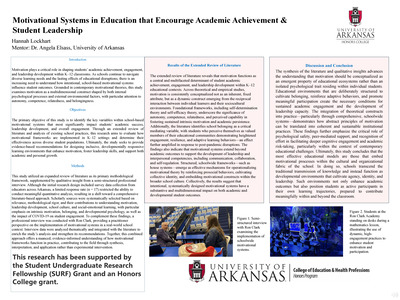
Motivational Systems in Education that Encourage Academic Achievement and Student Leadership
Hannah Lockhart
This research investigates the role of motivational systems in education and their impact on students’ academic achievement, leadership development, and overall engagement following the implementation of school-based motivational frameworks. Grounded in an expanded review of educational and psychological literature, this study builds upon substantial evidence demonstrating that motivation is a critical determinant of both academic performance and personal development. While prior research consistently establishes positive correlations between student motivation and achievement, there remains a notable gap in empirical examination of how specific motivational systems are implemented in school contexts and how they function across diverse student populations. Drawing upon established theoretical frameworks, including Maslow’s Hierarchy of Needs, Bronfenbrenner’s Bioecological Systems Theory, self-determination theory, growth mindset, and self-efficacy theory, this study conceptualizes motivation as a multidimensional construct shaped by internal psychological processes and external environmental factors. Particular attention is given to how autonomy, competence, relatedness, and belongingness within educational settings influence students’ intrinsic motivation, persistence, and capacity for leadership. The study also situates motivational systems within broader socio-cultural and developmental contexts, recognizing the heightened importance of motivational supports during early adolescence and in the aftermath of widespread educational disruptions, such as those experienced during the COVID-19 pandemic. Through an examination of existing motivational programs and school-based practices, this research seeks to identify the variables that most significantly influence student motivation in relation to academic success, leadership skills, and social-emotional well-being. By addressing the lack of experimental and program-specific research in this area, the study aims to provide educators with actionable, research-based recommendations for designing and implementing motivational systems that are developmentally responsive and inclusive of diverse learners. Ultimately, this study contributes to the field of education by advancing a more comprehensive understanding of how intentional motivational frameworks can enhance academic outcomes, foster student leadership, promote positive behavior, and support holistic student development. The findings are intended to inform educational practice and policy by offering evidence-based strategies for cultivating learning environments that empower students to thrive academically, socially, and personally.
-
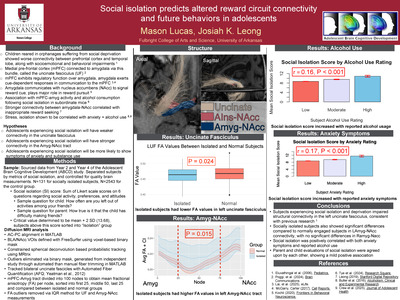
Social isolation predicts altered reward circuit connectivity and future behaviors in adolescents
Mason Lucas
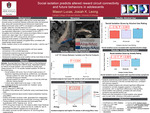
Adolescence is a period of transition from childhood to adulthood when people explore risky behaviors. Stressors during adolescence can change structural brain connectivity. Previous research has found weaker structural connectivity between reward circuits and future cognitive impairments among children raised in orphanages. Comparative research in mice suggests that social isolation after bullying can damage these connections and induce alcohol seeking. We tested whether social isolation was related to lower connectivity of targeted structural connections in adolescent humans. We analyzed data from the Adolescent Brain Cognitive Development study and found 130 subjects had experienced extreme social isolation. To evaluate the level of social isolation experienced by each subject, we averaged their scaled answers to questions regarding isolation and investigated the subjects two standard deviations above the mean. We predicted that social isolation would alter connectivity between reward circuits, which may lead to future risk seeking. The tracts that we studied included the uncinate fasciculus, a bundle of fibers connecting the prefrontal cortex to the amygdala, and the connection between the amygdala and nucleus accumbens. We characterized the structural connectivity between reward circuits in our group of subjects from MRI scans to evaluate our tracts of interest. We found that in socially isolated adolescents, there was impaired connectivity in the left uncinate fasciculus (p = 0.024) and abnormally stronger connectivity between the left amygdala and nucleus accumbens (p = 0.015). In order to evaluate what kind of effect social isolation and these connectivity impairments had on this group of adolescents, we predict that the group of isolated subjects will have behavioral differences like increased risk taking and substance use.
-
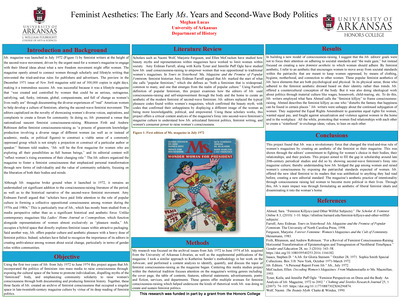
Feminist Aesthetics: The Early Ms. Years and Second-Wave Body Politics
Meghan Lucas
Despite its tremendous impact on both second-wave feminist organizing and women's political consciousness, Ms. magazine remains understudied by scholars interested in emergent feminist consumers and emergent feminist citizens. This study aims to fill the gap in scholarship around late 20th century periodical studies by offering content analysis of the first two years of Ms., July 1972 to June 1974 to offer a content analysis of second-wave feminism's foray into magazine culture and understand how Ms. articulated feminist politics, feminist writing, and women's consumer power to raise women’s consciousness. My research was focused on the archival issues from July 1972 to June 1974 of Ms. acquired from the University of Arkansas Libraries, as well as the supplemental publications of the magazine. I took a similar approach to Katherine Sender’s methodology in her work on the Advocate, and performed a content analysis to identify, quantify, and discuss the topoi of feminist consciousness-raising as the magazine began. Centering this historical media studies project within the rhetorical tradition focuses attention on the magazine's writing genres including: the cover page, the table of contents, features, editorial statements, advertisements, poetry and fiction, services, and departments. These genres offer multiple avenues for feminist consciousness-raising which helped underscore the kinds of rhetorical work Ms. was doing to create and sustain feminist politics. In engaging with Ms. magazine through a critical cultural lens, and building upon the work of Amy Erdman Farrell, and Katherine Sender, this project asks: How did Ms. raise women’s consciousness about political issues raised by feminist organizing? How did consciousness-raising in the magazine employ individualism and community-building to influence the behavior of female readers? How did Gloria Steinem use her voice as editor to build a forum for women’s consciousness and did it differ from the editorial function that Jordan Carroll defines for male contemporaries? What contributions did Ms. offer women beyond consciousness-raising? I argue that Ms. incorporated the politics of feminism into mass media to raise consciousness through: exposing the cultural space of the home to promote individualism, dispelling myths of the “feminized” body, and emphasizing community solidarity to raise women's consciousness through both documenting and producing feminist history. Together, these three facets of Ms. created an archive of feminist consciousness that occupied a singular space in late-twentieth-century magazine culture by virtue of its deep reading of feminist politics. In answering my research questions, this project found that Ms. was a revolutionary force that changed the tried-and-true rule of women’s magazines by creating an aesthetic of the feminist in their magazine. The magazine’s aesthetic practice of intentionality through consciousness raising led women to become more political in their lives. Through this, Ms.’s main impact was through formulating an aesthetic of liberal feminist ideals and disseminating it into the woman’s home. This research contributes to showing how media adds to the cultural canon and creates lasting effects in all aspects of social life. Ms. magazine’s iconic messages in the 1970s still mirror conversations had today. This project shows how influential representational media can be.
-
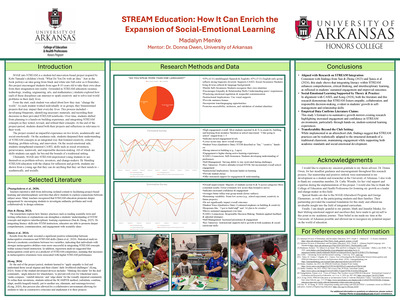
STREAM Education: How It Can Enrich The Expansion Of Social-Emotional Learning.
Madalyn Menke
This research project investigates the implementation of a STREAM Education curriculum – integrating science, technology, reading/writing, engineering, arts/humanities, and mathematics, with a group of fourteen elementary-aged students. The study explores how the intentional inclusion of Reading and the Arts within a traditional STEM framework - guided by the Collaborative for Academic, Social, and Emotional Learning (CASEL framework - can enrich students’ social-emotional wellbeing and engagement in learning. In partnership with SOAR Afterschool Care, an eight-week instructional project was implemented in which students read What Do You Do with an Idea? by Kobi Yamada as a central text. The book served as a springboard for students to reflect on themes of creativity, innovation, and perseverance, as well as to imagine how their own ideas could make a meaningful difference in their everyday environments. Guided by each of these themes, students collaboratively brainstormed and developed hands-on projects designed to address real-life challenges relevant to their own lives and communities. The research methodology included pre- and post- surveys completed by students, allowing for the collection and analysis of both quantitative and qualitative data. Findings indicate a higher indication for hands-on learning and confidence in self-directed project work. Despite limitations such as a small sample size, this study underscores the value of interdisciplinary, hands-on learning experiences in empowering young learners and fostering creativity, confidence, and authentic skill development. Overall, the findings suggest a need for continued research on subject integration, particularly within STREAM-based approaches, as such models show promise in supporting the development of students’ social-emotional competencies.
-
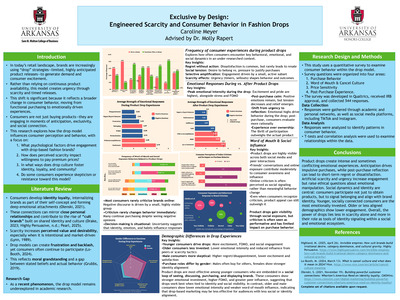
Exclusive by Design: Engineered Scarcity and Consumer Behavior in Fashion Drops
Caroline Meyer
The drop business model centers on releasing small batches of products, often without much notice, on a recurring or semi-regular schedule. These limited releases, or "drops," sell out quickly and rarely restock, creating urgency and making each product feel exclusive. Consumers are trained to anticipate launches, check for updates, and act fast within minutes to secure items before they’re gone. By tapping into psychological drivers such as scarcity, fear of missing out (FOMO), and the desire for social belonging, the drop model flips traditional retail logic. Instead of keeping shelves full, it withholds. Instead of lowering prices to drive sales, it often prices everyday items, such as hoodies, at a premium, justifying this through status, storytelling, and community.To understand how consumers navigate this environment, I designed a survey based on prior consumer behavior research, conversations with participants both inside and outside drop culture, and my own experience with these releases. The survey explored four key areas: participation and purchase behavior, word-of-mouth and online commentary, pricing perceptions, and post-purchase reflections.To collect responses, I developed a three-part distribution strategy. First, I shared platform-specific content on TikTok, Instagram, and LinkedIn, tailoring messaging to each audience. Second, I encouraged participants to forward the survey to their friends, thereby expanding its reach through personal networks. Third, I contacted professional and academic advisors to access additional perspectives. The intentionality behind these steps helped ensure the survey reached both regular drop followers and more casual participants. The diversity of responses provided a well-rounded view of product drop experiences.Preliminary results suggest that fashion product drops are emotionally charged and socially complex experiences. The data shows consumers reporting excitement, urgency, anxiety, and occasional regret, often occurring simultaneously. Many respondents indicated identity signaling and a desire to belong within brand communities as purchasing motivations. Furthermore, social influence and word-of-mouth also played a role in shaping drop participation and satisfaction. Findings reveal that participants frequently reassessed value after the fact, balancing their emotional impulses against practical considerations. The findings, among others, provide brands with insight into what drives people to act within minutes, how scarcity and pricing influence emotional engagement, and how social networks and community norms shape both decisions and satisfaction. For consumers, it illuminates why they feel excitement and regret at the same time, showing how identity, belonging, and FOMO interact in fast-moving markets. Academically, the study provides one of the first datasets on this emerging phenomenon and offers a foundation for understanding product drops and other high-pressure, exclusive retail environments. With this data, we can better understand how modern retail culture shapes decision-making, social signaling, and emotional experience.
-
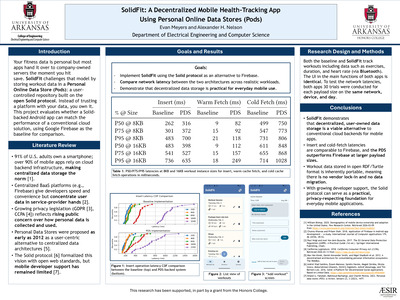
SolidFit: A Decentralized Mobile Health-Tracking App Using Personal Online Data Stores (Pods)
Evan Meyers
Personal fitness data is increasingly collected through mobile applications, yet most current systems store this information in centralized platforms that limit user control, long-term ownership, and data portability. This project addresses the question of whether a decentralized data model can be used to support everyday fitness tracking while preserving user autonomy and privacy. As individuals become more aware of how their health data is collected and shared, there is a growing need for systems that allow users to retain ownership of their personal information without sacrificing usability or functionality.This research presents SolidFit, an Android-based fitness tracking application designed around the Solid protocol and Personal Online Data Stores (Pods). SolidFit allows users to authenticate using a WebID and store workout records directly in their own decentralized storage rather than on a centralized server. The application supports creating, editing, viewing, and deleting workout entries, attaching images, and synchronizing data between local storage and the user’s Pod. The system integrates modern Android development tools, a secure authentication flow, and background data synchronization to ensure consistency across sessions and devices. Health-related inputs, such as heart rate and weight measurements, can also be recorded through supported system interfaces.The final system demonstrates that decentralized storage can be successfully integrated into a consumer-facing mobile application without significant usability tradeoffs. Testing shows that workout data is reliably created, synchronized, and retrieved from user-controlled storage, while maintaining offline functionality and graceful recovery when network access is unavailable. Media files associated with workouts are securely uploaded and retrieved as needed, and data conflicts between local and remote sources are resolved consistently.These results suggest that decentralized data architectures are a viable alternative for personal health applications. By giving users direct control over where and how their fitness data is stored, this approach reduces reliance on centralized platforms and lowers the risk of large-scale data misuse. Beyond fitness tracking, the methods demonstrated in this project can inform future research and development of privacy-preserving mobile applications in healthcare, wellness, and other domains where personal data sensitivity is high.
-

Evaluating High-Strength Steel Welded Connections for Future AWS Welding Standards
Parker Minter
Welding plays a critical role in many civil engineering applications as it is a common method used to connect structural steel components. Because of how widespread the practice is, the American Welding Society (AWS) has developed a set of standardized welding guidelines to ensure consistent quality in structural welds. These standards allow common weld types to be fabricated using pre-approved procedures (e.g. welding materials, temperatures, and positions). Recently, high-strength structural steels have begun to be available domestically. Current AWS standards do not allow for high strength steels (yield strength greater than 80ksi) and need to be evaluated for the inclusion of high strength steel welds. This gap in weld standards for high strength steel places a burden on fabricators and inspectors. Currently, they need to develop case-by-case procedures for high strength structural steel welds and validate them through in-house performance evaluation.This research seeks to address the gap in standardization by examining how steel plate assemblies respond to a tensile load at various angles. Welded plates with yield strengths of 50ksi, 80ksi, and 100ksi will be evaluated. These plates are attached at several angles, in line with field applications (15, 30, 45, 60, and 90 degrees). By examining how the weld plate connections respond to tensile loads at various angles and steel strengths, the research aims to find trends in performance and understand how high strength steel connections behave.Initially, this work is being conducted using 3D finite element analysis. This analysis allows for numerous iterations of models with various weld configurations. Model parameters of interest include weld geometry and steel stress-strain behavior. Based on this modeling, physical testing specimens will be fabricated and used to validate the computational modeling. Recommendations to AWS are expected to include the required weld size for each angle of interest for high-strength steels.
Printing is not supported at the primary Gallery Thumbnail page. Please first navigate to a specific Image before printing.